

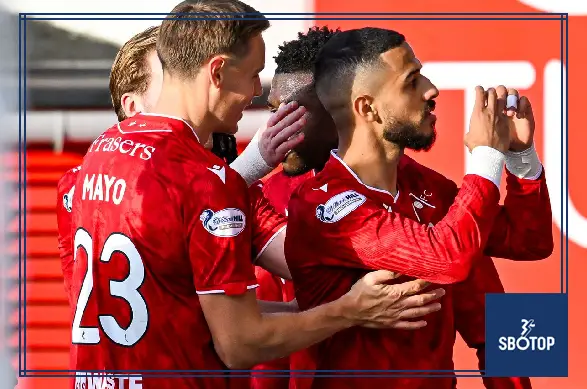
Aberdeen returned to winning ways with a 3-1 victory over St Mirren at Pittodrie on October 17, 2026, recovering from an uncomfortable first half to move above their opponents in the Scottish Premiership table.
Brad Lyons supplied a spectacular early opener, but the visitors responded strongly and deservedly equalised through Eseosa Sule before the interval. Aberdeen then improved after half-time, with Kevin Nisbet restoring their lead before substitute Ayoub Mouloua added the decisive third.
The result rewarded a performance that became more convincing as the afternoon progressed. Aberdeen needed important first-half interventions from goalkeeper Marius Müller, changes from the bench and sharper attacking execution to secure the points.
For St Mirren, a fifth consecutive league defeat was particularly frustrating because their opening-half display had offered genuine encouragement. They controlled possession for substantial periods, only to lose their grip when Aberdeen raised the intensity after the break.
Lyons Gives Aberdeen an Immediate Lift
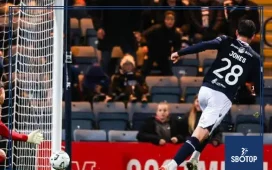
Aberdeen could scarcely have asked for a better beginning. Inside two minutes, Lyons advanced into shooting territory and struck a superb effort into the top corner, with the ball clipping the underside of the crossbar on its way past Jacob Chapman.
The move began with Mats Knoester finding Lyons, who exchanged passes with Conor Ronan before creating room to shoot.
It was a goal that combined purposeful progression with an exceptional finish. Lyons recognised the space ahead of him, moved forward and punished St Mirren before their defence could close him down.
For a home side seeking a response to defeat against St Johnstone, the breakthrough offered an immediate lift.
Yet the advantage did not produce sustained control. Aberdeen had the opening goal, but St Mirren soon began playing with greater fluency and repeatedly forced the hosts to defend nearer their own penalty area.
St Mirren Respond With Purpose
The visitors’ response was more substantial than a brief spell of possession. They circulated the ball confidently, created openings through wide areas and began testing Aberdeen’s defensive organisation. Their movements gave the home side problems that the early goal had temporarily concealed.
Killian Phillips had a particularly promising opportunity after a low delivery reached him inside the area. Müller saved with his feet, and Knoester blocked the follow-up.
The sequence was important because it required two separate defensive actions to preserve Aberdeen’s lead. The goalkeeper prevented the initial finish, but the danger remained until Knoester intervened.
St Mirren continued to threaten, with Luke Thomas among those drawing further work from Müller.
Aberdeen occasionally offered an attacking response through Nisbet, but they were struggling to establish a rhythm. Their lead increasingly depended on resisting the visitors’ pressure rather than keeping the game away from goal.
Müller Keeps the Contest Within Reach
Müller’s contribution became central to Aberdeen’s eventual victory.
Before the break, the goalkeeper dealt with several threatening moments as St Mirren found routes through or around the home defence. His saves prevented the visitors’ encouraging play from producing an earlier equaliser.
That distinction matters when assessing the final score.
A 3-1 victory can suggest a comfortable afternoon, but Aberdeen’s first half required substantial defensive work. Without Müller’s interventions, the circumstances at the interval could have been considerably less favourable.
St Mirren were also making Aberdeen defend repeated attacking sequences. Even when the first attempt was stopped, the hosts needed alert reactions to clear the remaining danger.
Nisbet had headed opportunities at the other end, offering reminders that Aberdeen retained a threat.
Nevertheless, the balance of the half belonged to the visitors. The home side’s spectacular opener had given them something to protect, but not a reliable means of controlling the match.
Sule Delivers a Deserved Equaliser
St Mirren finally levelled in the 42nd minute.
Thomas helped develop the attack before Phillips supplied the low delivery that Sule converted, bringing the visitors level shortly before half-time.
The goal rewarded their persistence and reflected the pressure they had applied since falling behind.
For Aberdeen, the concession was disappointing but hardly unexpected. Their goalkeeper had already been required to intervene, and St Mirren had repeatedly reached positions from which an equaliser looked possible.
The timing also changed the interval discussion.
Aberdeen could no longer rely on their early advantage as evidence that the existing approach was sufficient. The score was level, and the visitors had demonstrated enough attacking quality to threaten another goal.
St Mirren, meanwhile, had a platform from which to pursue victory.
Their challenge was to maintain the effectiveness of their first-half football while anticipating a response from opponents who had clear reasons to change.
Aberdeen’s Half-Time Changes Alter the Balance
Stephen Robinson acted at the interval, introducing Stuart Armstrong and Tony Yogane in place of Ronan and Lyons.
The changes, alongside a tactical adjustment, helped Aberdeen become more assertive.
Yogane soon had an opportunity to put the hosts ahead again, meeting a delivery from Chris Cadden but sending his first-time effort over the crossbar.
Armstrong then found the net, only for the effort to be ruled out for offside. The disallowed finish did not alter the score, but it formed part of a noticeably stronger attacking spell.
Aberdeen were now reaching dangerous positions with greater regularity.
The improvement was significant because it changed the demands on St Mirren. Instead of moving forward with the confidence of the opening half, the visitors increasingly had to manage runners, deliveries and pressure around their penalty area.
The match had shifted before the next goal arrived.
Nisbet Reacts Fastest After Penalty Drama
Aberdeen regained the lead in the 58th minute following a foul by Paul Nsio on Yogane.
Referee John Beaton initially awarded a free-kick, but a video review established that the offence had taken place inside the penalty area. The decision was therefore changed to a penalty.
Nisbet took the spot-kick, which Chapman saved.
The Aberdeen captain reacted quickly to the rebound, however, and finished at the second attempt.
That sequence is important to the account of the goal: Nisbet’s initial penalty was stopped, with his follow-up supplying the breakthrough.
For Chapman, the save did not bring the reward his intervention had threatened to secure. For Nisbet, alertness after the missed attempt proved decisive.
Aberdeen now led again, this time during a period when their overall performance was improving. Unlike the opening minutes, the goal reflected a broader spell of attacking pressure.
Mouloua Makes an Immediate Impact
The third goal highlighted the influence of Aberdeen’s substitutes.
Mouloua replaced Toyosi Olusanya in the 71st minute and scored almost immediately afterwards.
Afeez Aremu took a quick free-kick and released the forward before St Mirren could organise themselves. Mouloua moved into the area, shifted the ball onto his right foot and finished low across Chapman into the far corner.
It was a controlled conclusion to an attack built on awareness and speed of thought.
Aremu recognised the opportunity to restart quickly, while Mouloua responded with movement and composure. St Mirren’s delayed reaction left them defending an immediate threat rather than a settled passage of play.
The goal gave Aberdeen a two-goal advantage and changed the closing stages.
St Mirren now needed more than one successful attack to recover the result. Aberdeen, meanwhile, could approach the remaining minutes with a margin for error they had previously lacked.
A Stronger Finish Completes Aberdeen’s Recovery
Aberdeen continued creating opportunities after moving 3-1 ahead.
Nisbet had a chance to add another goal, but a heavy touch allowed Chapman to advance and smother the danger. The goalkeeper’s intervention prevented the scoreline from becoming more damaging for the visitors.
The broader pattern was now markedly different from the first half.
Aberdeen were finding space, moving forward with purpose and asking St Mirren to defend more threatening situations. Their substitutions had contributed directly to that change.
The final statistics also showed why possession alone could not explain the result. St Mirren had roughly two-thirds of the ball, yet Aberdeen finished with more attempts overall.
Both teams registered seven shots on target.
Those figures underline the contrasting nature of the contest: St Mirren enjoyed substantial involvement, but Aberdeen combined important saves with more effective second-half attacking actions. The hosts ultimately made better use of the moments that decided the outcome.
Three Points Bring Relief and a Clear Lesson
The victory lifted Aberdeen above St Mirren and provided a welcome response to their previous home defeat.
It also offered evidence that Robinson’s side could correct a difficult performance within the match. Their first-half problems were real, but the response after the interval was practical and productive.
St Mirren could take encouragement from their attacking work before the break, although that could not disguise another defeat. Sustaining their performance across both halves remained the unresolved issue.
For Aberdeen, the afternoon belonged to several contributors.
Lyons supplied the spectacular beginning, Müller kept the contest manageable, Nisbet restored the advantage and Mouloua secured it.
The three-goal return was the visible reward. The more substantial achievement was Aberdeen’s ability to recognise that their early lead had not been enough, change the direction of the match and finish with the stronger performance.
Also Read: