

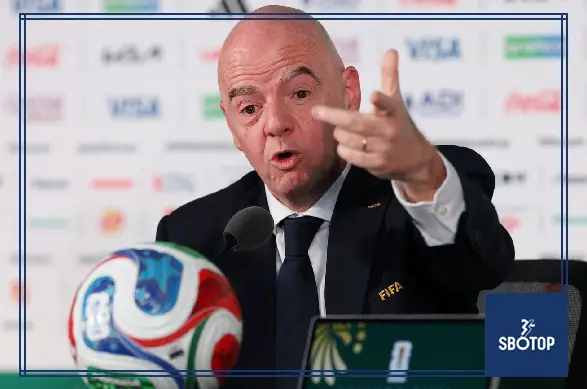
The increasingly public dispute between FIFA and European football authorities has taken another significant turn after FIFA accused UEFA and European football chiefs of engaging in what its lawyers described as harassment against FIFA president Gianni Infantino.
The latest development emerged through a court filing in the United States, where FIFA is challenging UEFA’s efforts to obtain evidence connected with the abandoned FIFA Forward Enterprise proposal. FIFA has characterized UEFA’s legal actions as part of a broader misinformation campaign intended to influence the upcoming FIFA presidential election.
The dispute comes at a particularly sensitive time for world football. Infantino is seeking another term as FIFA president, with the election scheduled for March 2027. At the same time, relations between FIFA and UEFA have become increasingly strained over governance, commercial strategy and the handling of major decisions.
FIFA’s latest filing argues that UEFA’s legal moves are not simply about gathering evidence but are also connected to the political contest surrounding FIFA’s leadership.
UEFA, however, has presented a different interpretation. European football authorities have raised concerns about the abandoned commercial project and have sought documents relating to how the proposal was developed and presented.
The result is an increasingly complex dispute involving football governance, commercial rights and the future leadership of the global governing body.
The FIFA Forward Enterprise Dispute
At the centre of the disagreement is FIFA Forward Enterprise, commonly referred to as FFE.
The proposal involved a plan connected to the commercial rights of FIFA’s major competitions and was intended to attract private investment. The idea generated strong opposition from several parts of European football and was ultimately withdrawn in 2026.
FIFA has maintained that exploring the proposal was part of its responsibility to investigate ways of increasing the organization’s commercial potential.
UEFA and other critics have questioned the way the proposal was developed and communicated. UEFA has sought access to documents and testimony in the United States as part of its efforts to investigate the circumstances surrounding the plan. It has also indicated that it could pursue legal action in Switzerland.
FIFA has rejected the suggestion that Infantino was seeking personal financial benefit.
In its court arguments, FIFA stated that UEFA’s suggestion that the president intended to profit personally from the project had no basis, according to reports on the filing.
The disagreement has therefore moved beyond an internal football debate and into legal proceedings.
Why the Dispute Has Become So Significant
Arguments between international and continental football authorities are not unusual, but the current disagreement is significant because of its timing and the senior figures involved. Infantino is preparing to seek another term as FIFA president, while UEFA has become increasingly critical of his leadership.
Recent developments have included several European football associations withdrawing previous support for Infantino’s re-election campaign. The Swiss Football Association, which had previously backed his candidacy, also withdrew its support in September, citing concerns related to leadership, governance, transparency and decision-making.
France, England, Wales and other European associations have also been involved in the wider debate over FIFA’s leadership.
UEFA itself has called for governance reforms and has raised questions about FIFA’s decision-making processes.
The timing has inevitably connected the institutional dispute with the upcoming presidential election.
FIFA argues that UEFA’s legal actions should not be used as a way to influence that election.
UEFA, on the other hand, has said that its concerns relate to governance and accountability rather than simply electoral politics.
FIFA’s Harassment Claim
The word “harassment” has become one of the most notable elements of FIFA’s latest legal response.
According to the court filing reported by Sky News, FIFA’s lawyers argued that UEFA’s conduct demonstrated bad faith and was undertaken for the purpose of harassment. FIFA also accused European football authorities of attempting to spread misinformation about Infantino.
These are FIFA’s legal arguments and should not be treated as an established finding by the court.
The filing represents FIFA’s position in an ongoing dispute.
The organization is seeking to prevent or limit UEFA’s efforts to obtain evidence connected with the FFE proposal.
The language demonstrates just how far relations between the two institutions have deteriorated.
Instead of a disagreement limited to commercial policy, the dispute now includes accusations concerning the motives behind legal action.
UEFA’s Concerns Over FIFA Governance
UEFA has taken a different position.
European football leaders have increasingly called for changes to FIFA’s governance structure and greater transparency around major decisions.
The Premier League, La Liga, Serie A and Bundesliga have joined calls for reforms, including proposals for more inclusive decision-making and clearer separation between FIFA’s regulatory and commercial responsibilities.
UEFA’s opposition to the FFE proposal is part of this wider concern.
European football officials have questioned how the commercial plan was developed and whether sufficient consultation took place before it was presented.
UEFA has also sought evidence through legal proceedings in the United States.
Its position is that obtaining the relevant documents could help establish what happened during the development of the proposal.
FIFA disputes that interpretation and argues that the legal process is being used to attack the organization and its president.
A Wider Power Struggle in World Football
The dispute highlights a longstanding structural reality in international football: FIFA and the continental confederations have different responsibilities and sometimes competing interests.
FIFA governs world football and oversees global competitions such as the World Cup.
UEFA governs football across Europe and represents some of the world’s most commercially powerful leagues, clubs and national associations.
Those different responsibilities can create disagreements over commercial strategy, competition calendars and governance.
The current dispute is particularly significant because European football represents an enormous part of the global football economy.
European leagues and clubs have considerable commercial influence, while FIFA controls global competitions and international regulations.
Finding a balance between those interests is therefore essential to the functioning of the sport.
Infantino’s Position Under Growing Scrutiny
Infantino has been FIFA president since 2016 and is seeking another term in 2027.
His leadership has been associated with significant changes to FIFA’s competitions and commercial strategy.
However, the recent dispute has placed greater attention on how decisions are made within the organization.
Critics have raised questions about transparency and consultation, while FIFA has defended the legitimacy of its decision-making processes.
Infantino has also sought to present himself as willing to consider governance improvements.
In recent correspondence, he has backed a review of FIFA’s decision-making procedures amid the dispute. FIFA has also initiated a review of proposals concerning financial distributions to national associations after UEFA and CONCACAF requested increased funding.
Those developments suggest that reform and governance will remain important themes in the months leading up to the election.
The 2027 FIFA Presidential Election
The timing of the dispute cannot be separated entirely from the approaching FIFA presidential election.
Infantino intends to seek a fourth term in March 2027.
The current political environment within world football is more complicated than it was when he secured his previous mandates.
Several European associations have withdrawn support, while UEFA has pushed for changes to FIFA’s governance.
At the same time, Infantino continues to have support from other parts of the global football community.
The election process therefore provides an important backdrop to the current dispute.
FIFA’s argument that UEFA is attempting to influence the election reflects this context.
UEFA has not simply criticized an individual decision; its representatives have increasingly discussed broader structural reforms.
The disagreement is therefore likely to remain part of the election conversation.
European Associations Reconsider Their Position
The changing positions of national football associations are another important element.
The Swiss Football Association’s decision to withdraw support was particularly notable because Switzerland is Infantino’s home country and FIFA is headquartered there.
The SFV said its decision followed a reassessment of recent developments and cited concerns about leadership, governance, transparency and decision-making.
Other European associations have also reconsidered their backing.
These developments do not necessarily determine the outcome of the FIFA election, but they demonstrate that Infantino faces a more contested political environment within Europe.
UEFA has not yet formally presented an alternative candidate, according to recent reports.
That means the debate is currently focused heavily on governance and the direction of FIFA rather than simply on a direct electoral contest between two named candidates.
The Commercial Questions Behind the Conflict
Football governance is increasingly intertwined with commercial interests.
The world’s biggest competitions generate enormous revenues through broadcasting, sponsorship and other commercial arrangements.
FIFA’s World Cup is one of the most valuable sporting properties in the world.
Any proposal involving changes to the commercial structure surrounding the tournament is therefore likely to attract intense scrutiny.
The FFE proposal became controversial partly because of questions surrounding valuation, ownership and the potential role of private investors.
FIFA has argued that the proposal was intended to strengthen the organization’s commercial position and generate additional resources.
Critics have questioned whether the proposal was sufficiently transparent and whether stakeholders were properly consulted.
These differences reflect a broader debate about how football’s commercial future should be managed.
Why Transparency Has Become a Central Issue
Transparency is one of the recurring themes in the dispute.
FIFA has argued that its proposal was subject to appropriate oversight and that the governing body’s decision-making structures were capable of evaluating it.
UEFA and other critics have questioned the process that led to the proposal.
This disagreement demonstrates why transparency is so important in sports governance.
When major commercial decisions involve billions of dollars, football associations, clubs and other stakeholders want to understand how those decisions are made.
Clear documentation, consultation and independent oversight can help reduce disputes.
The current legal proceedings may ultimately shed more light on the development of the FFE proposal, depending on what evidence courts allow to be obtained.
Ceferin and Infantino at the Centre of the Disagreement
UEFA president Aleksander Čeferin has emerged as one of Infantino’s most prominent critics.
Čeferin has publicly questioned the direction of FIFA and called for changes to its governance.
In a recent address to European club representatives, Čeferin criticized the FFE proposal and other aspects of FIFA’s recent leadership. He argued that European football should speak more forcefully about the direction of the global game.
His comments demonstrate how far the relationship between FIFA and UEFA has deteriorated.
However, the disagreement is larger than the relationship between two presidents.
It concerns the distribution of authority within international football and the degree of influence different stakeholders should have over global decisions.
The Legal Battle Could Continue
The court proceedings in the United States could become an important source of further information.
UEFA has sought documents and testimony connected with the FFE proposal.
FIFA is seeking to prevent or limit that discovery, arguing that UEFA’s actions are inappropriate and politically motivated.
The courts will determine the legal questions involved.
Until those processes develop further, claims made by either side should be distinguished from established findings.
The legal dimension adds another layer to an already complicated football governance dispute.
It also means that the debate is no longer limited to public statements between football organizations.
Also Read: