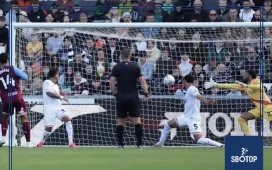



West Bromwich Albion recovered from a disastrous opening to defeat Blackburn Rovers 3-2 at The Hawthorns, with substitute Felix Horn Myhre delivering the decisive goal in the 89th minute of a dramatic Championship encounter.
Andri Gudjohnsen’s early double had given Blackburn a commanding advantage, leaving Albion two goals behind after just 12 minutes. Barney Stewart began the recovery before Isaac Price’s second-half penalty brought the teams level. Myhre then completed the turnaround shortly before stoppage time.
The victory on 17 October rewarded West Brom’s persistence and attacking pressure, although their defensive mistakes ensured the afternoon was considerably more demanding than they would have wanted.
For Blackburn, an excellent start became a painful defeat. Their early efficiency put them within reach of another positive result, but they could not prevent the hosts from gradually taking control.
Gudjohnsen Punishes Albion’s Slow Start
Blackburn’s opening goal arrived in the sixth minute after Kristi Montgomery dispossessed Brayann Pereira. Gudjohnsen received the ball and beat Max O’Leary with a finish from outside the penalty area.
The move exposed the danger of losing possession before a defensive structure is ready to respond. Blackburn recognised their opportunity quickly, while Albion paid an immediate price for failing to protect the ball.
West Brom almost answered through Jayson Molumby, who struck the post from close range. That opportunity suggested the hosts could threaten, but the afternoon soon became more difficult.
Gudjohnsen scored again in the 12th minute, this time finishing following a corner. His second goal established a substantial lead before the contest had properly settled.
For the visitors, it was an ideal platform. For Albion, it created an urgent need to recover their composure without allowing the pursuit of goals to produce further defensive vulnerability.
Stewart Gives the Hosts a Route Back
West Brom reduced the deficit in the 19th minute through Stewart, whose intervention changed the immediate challenge facing both teams.
Blackburn lost possession in their defensive third, Rabby Nzingoula’s attempt was blocked, and Stewart reacted to the loose ball. His shot took a deflection before beating Balazs Toth.
The goal did not erase Albion’s problems, but it prevented Blackburn’s early advantage from becoming the defining feature of the entire first half.
Instead of needing two unanswered goals simply to draw level, the hosts were now within one. That difference allowed them to pursue the match with greater patience.
Stewart’s contribution also underlined the importance of reacting inside the penalty area. The original attack had not produced a clean breakthrough, yet the opportunity remained alive after the blocked effort.
By following the developing situation, he converted an untidy passage into the foundation of West Brom’s comeback.
Opportunities at Both Ends Before the Interval
The remainder of the first half showed that neither side could assume control solely because of the score.
Blackburn threatened to restore their two-goal cushion when Jayden Fevrier fired over after Todd Cantwell’s effort reached him inside the penalty area. Had that opportunity been converted, Albion would have faced another significant setback before the interval.
At the other end, Jimmy-Jay Morgan headed over from a Price corner as West Brom searched for an equaliser.
Those chances gave the match a more balanced complexion than its opening minutes had suggested. Blackburn retained the advantage, but Albion had demonstrated that they could create openings against the visitors’ defence.
The half-time score remained 2-1 to Rovers. It preserved their reward for Gudjohnsen’s finishing while leaving West Brom close enough to believe the situation could be reversed.
The next goal would consequently carry considerable weight for the direction of the second half.
Pressure Builds After the Restart
Albion continued their pursuit after the break, producing attacks that forced Blackburn to concentrate on protecting their lead.
One Morgan effort struck Stewart and almost resulted in a goal, while Price also threatened without finding the required finish. These moments reflected the hosts’ growing presence around the penalty area.
Blackburn still possessed a possible route to a more comfortable position. Gudjohnsen had an opportunity to complete his hat-trick but sent a header over.
That miss mattered because a third goal would have altered the demands on West Brom considerably. Instead, the hosts remained just one successful attack away from equality.
Nzingoula and Price subsequently missed further attempts as Albion’s pressure continued.
The developing pattern suggested that Blackburn needed either greater control of possession or a more effective attacking outlet. Defending a narrow advantage became increasingly difficult when the hosts could repeatedly renew their attacks.
Price Holds His Nerve from the Spot
The equaliser eventually arrived in the 72nd minute after a West Brom counterattack ended with Molumby going down under Sean McLoughlin’s challenge inside the penalty area.
The referee awarded a penalty, giving Price responsibility for converting sustained pressure into a level score.
He chose a Panenka finish, lifting the ball centrally rather than striking firmly towards a corner. The execution brought Albion back to 2-2.
Such a penalty carries an obvious risk: its success depends heavily on the goalkeeper’s movement and the taker’s control. On this occasion, Price delivered the outcome his team needed.
The goal also changed Blackburn’s position. Having spent much of the afternoon defending an advantage, they now had to respond to a match that had effectively restarted with less than 20 minutes remaining.
For West Brom, the equaliser offered both a reward and an opportunity to pursue a complete recovery.
Mowbray Disputes the Penalty Decision
Blackburn manager Tony Mowbray challenged the decision afterwards, expressing dissatisfaction with the award and relaying McLoughlin’s disagreement over the incident.
His criticism should be understood as the manager’s assessment rather than proof that the referee made an error. The confirmed sequence is that the penalty was awarded and Price converted it.
That distinction matters when evaluating a match influenced by a disputed decision. Frustration can explain the visitors’ reaction without resolving the incident conclusively in their favour.
The penalty was undoubtedly important because it removed Blackburn’s lead. However, the final result also depended on events that followed.
Rovers still had the opportunity to leave with a draw after Price scored. West Brom, meanwhile, needed to maintain their attacking effort rather than assume that drawing level would automatically produce a winner.
The contest remained open, even as its momentum increasingly favoured the hosts.
Morrison’s Substitutes Make the Difference
James Morrison’s changes became central to the decisive passage.
Aune Heggebo had replaced Stewart during the second half, while Myhre entered much later, shortly before making his winning contribution.
The substitutions provided fresh involvement in a match where West Brom were continuing to seek opportunities around Blackburn’s penalty area. Their importance ultimately lay in what the players did when the final opening appeared.
Molumby delivered a cross, Heggebo headed the ball across the goalmouth, and Myhre supplied the close-range finish.
It was an effective example of an attack being completed through successive contributions. The initial delivery required a useful first contact, and that contact needed someone positioned to finish.
Myhre’s arrival ensured the move ended with a goal rather than another missed opportunity.
For Morrison, the outcome rewarded the decision to continue adjusting his attacking options while the possibility of victory remained.
Myhre Completes the Turnaround
The winning goal arrived in the 89th minute, leaving Blackburn little time to recover.
Myhre’s close-range header transformed a successful fightback into a victory. What had begun as an attempt to rescue something from a poor opening now ended with all three points.
Blackburn applied late pressure, but West Brom protected their newly established advantage through the closing stages.
The timing naturally gave the finish additional significance. Yet the winner was also the final product of a recovery that had developed over much of the match.
Stewart’s goal had kept Albion within reach. Price’s penalty had removed the remaining deficit. Myhre then supplied the decisive contribution.
Each stage required a different response: an immediate reaction to a loose ball, composure from the penalty spot and alert positioning near goal. Together, those actions overturned Gudjohnsen’s early double and settled an absorbing encounter.
Victory Offers Encouragement and a Warning
The result gave West Brom consecutive victories, but the manner of this success contained lessons alongside the celebration.
Their response to adversity was encouraging. They continued creating chances and found contributions from several players rather than relying on one isolated moment.
However, conceding twice in the opening 12 minutes is not a sustainable starting point. Morrison’s team had to spend most of the afternoon repairing damage that better early decisions might have prevented.
Blackburn could take encouragement from Gudjohnsen’s finishing and their ability to punish mistakes, although surrendering a two-goal advantage demanded scrutiny.
The broader implications for either club would depend on subsequent performances. This match alone could not establish how their seasons would unfold.
At The Hawthorns, though, the immediate outcome was clear. West Brom recovered from a position of serious difficulty, maintained their pursuit and found a late winner through a substitute ready to seize his moment.
Also Read: