

Middlesbrough climbed to the top of the Championship with a commanding 5-1 victory over Bolton Wanderers, combining sharp attacking combinations with ruthless finishing at the Toughsheet Community Stadium. Will Lankshear scored twice as Kim Hellberg’s side delivered an impressive away performance on Friday, 23 October 2026.
Aidan Morris opened the scoring before Lankshear added the second. A deflected Adilson Malanda header extended the advantage, although Theo Bair gave Bolton hope immediately before half-time. Middlesbrough eventually extinguished that resistance through Amario Cozier-Duberry and Lankshear, who struck five minutes apart during the closing stages.
The result put Boro two points above Swansea and three ahead of West Ham immediately after the match, with both rivals still to play that weekend. It was a statement of intent rather than a guarantee about the promotion race, but Middlesbrough had supplied compelling evidence of their attacking quality.
Boro Set the Tempo Immediately
Middlesbrough approached the opening exchanges with an urgency that made Bolton uncomfortable. An early corner was followed by a chance for Tommy Conway, whose effort went narrowly wide.
The visitors were establishing their intentions before the home side could settle. Their attacking movement repeatedly asked Bolton to adjust, while support around the ball helped sustain the pressure.
There was a clear practical benefit to that approach. Bolton had to spend energy reacting to Middlesbrough’s actions rather than developing a rhythm of their own.
However, the hosts were not entirely without opportunities. Rúben Rodrigues had a chance shortly before the opening goal, but his effort lacked the power to trouble the goalkeeper. Within moments, Middlesbrough demonstrated the difference that a more effective final action could make.
Morris Turns Pressure into an Advantage
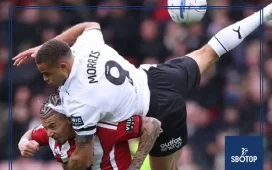
Morris put Boro ahead in the 13th minute after Cozier-Duberry supplied a square pass. His finish gave the visitors an early reward and changed the demands on both teams.
For Bolton, the setback created a need to respond without allowing their structure to become stretched. Middlesbrough could continue attacking while considering how to exploit the spaces that might appear.
The goal also highlighted the contribution of Cozier-Duberry. His involvement was not limited to carrying a threat himself; he recognised an opportunity to create a clearer finish for a teammate.
Such decisions matter in a fluid attack. Advancing into a dangerous area is valuable, but identifying the best final option determines whether promising possession becomes a goal. Boro executed that transition efficiently.
Bazunu Keeps Bolton Within Reach
Gavin Bazunu became increasingly involved as Middlesbrough continued producing chances. Several strong saves prevented the visitors from extending their advantage sooner.
The goalkeeper’s work helped Bolton remain in the contest, but it also reflected the pressure developing in front of him. Repeated interventions can delay further damage without solving the underlying problem.
From an analytical perspective, Bolton needed to reduce the frequency with which Middlesbrough reached shooting positions. That required more than individual defending inside the box.
Pressure on the ball, support between teammates and protection of passing lanes all influence how difficult a goalkeeper’s task becomes. Boro’s combinations were testing those connections, and the visitors eventually found another opening that Bazunu could not close.
Lankshear Finishes a Fine Team Move
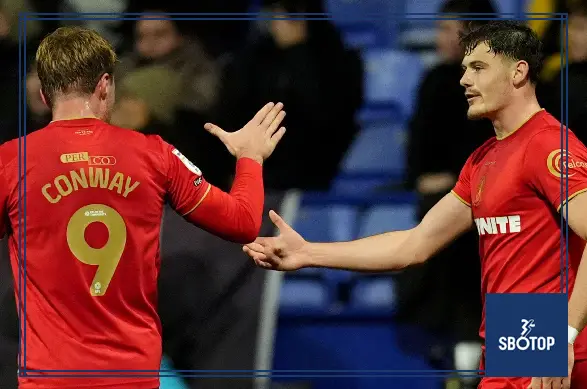
Middlesbrough doubled their lead in the 31st minute through Lankshear. Conway provided the final pass after an attractive sequence of build-up play, leaving the striker to complete the move.
The goal showed the value of coordinated attacking relationships. Players moving into complementary spaces can make the next pass easier and force defenders to choose between competing threats.
Lankshear supplied the finishing touch, but the opportunity depended on the work before it. His positioning gave Conway a useful target, while the preceding combination created the conditions for the delivery.
For Bolton, conceding again increased the difficulty of balancing ambition with caution. They needed greater attacking involvement, yet Middlesbrough had already shown how effectively they could punish openings. The match was moving firmly towards the visitors.
A Deflected Header Creates a Three-Goal Cushion
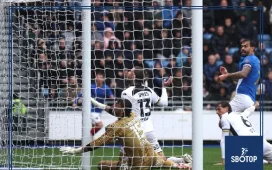
Boro’s third arrived in the 39th minute when Malanda attacked a corner and his header struck Lewis Brunt before entering the net.
The incident added another dimension to Middlesbrough’s advantage. They had already scored through open-play combinations and now profited from a set-piece delivery.
For defenders, those situations demand clear assignments and decisive reactions. The initial contest is important, but deflections can alter the ball’s path and leave little time to recover.
Bolton were now facing a substantial deficit before the interval. Middlesbrough, meanwhile, had earned the opportunity to manage the contest from a position of strength. Their challenge was to preserve concentration rather than assume that the score had already settled the result.
Bair Gives Bolton a Route Back
Bair reduced the deficit in first-half stoppage time, finishing through a crowded area to make it 3-1. The goal changed the atmosphere around the interval and offered Bolton a reason to believe the second half could develop differently.
A two-goal deficit remained difficult, but it was more manageable than three. One further Bolton goal would have significantly increased the pressure on Middlesbrough.
That possibility required Boro to begin the second half with renewed attention. A dominant opening period does not prevent an opponent from improving after tactical adjustments and a chance to regroup.
Bolton did become more competitive. For almost 20 minutes after the restart, they prevented Middlesbrough from registering a shot, demonstrating that the visitors would need patience alongside their earlier attacking fluency.
Hellberg’s Team Withstand the Response
The stronger Bolton spell tested Middlesbrough’s ability to handle a change in momentum. Their immediate task was not necessarily to recreate the first half, but to stop the home side turning encouragement into another goal.
Managing that phase required sensible positioning and measured decisions in possession. Forcing attacks prematurely could have surrendered the ball and prolonged Bolton’s pressure.
Equally, retreating too far would have reduced Middlesbrough’s ability to relieve the defence. Maintaining an attacking outlet remained important even when chances were less frequent.
Boro negotiated the period without conceding. That did not make their performance flawless, but it preserved the advantage they had worked to establish and allowed them to wait for another decisive opportunity.
Cozier-Duberry Ends the Comeback Threat
The fourth goal arrived in the 73rd minute, with Riley McGree finding Cozier-Duberry, who finished high into the net.
For Bolton, the timing was punishing. Their improved resistance had kept the possibility of a recovery alive, but the renewed three-goal gap left a much greater task with less time available.
Cozier-Duberry’s goal also completed a productive personal contribution after his involvement in the opener. Against a club where he had previously played on loan, he supplied both creativity and finishing.
Analytically, the moment demonstrated why an attacking side must remain prepared during a quieter spell. Opportunities do not always arrive continuously. The ability to execute when space returns can determine whether an advantage remains vulnerable or becomes secure.
McGree and Lankshear Complete the Scoring
Five minutes later, Middlesbrough struck again. A fast break ended with McGree choosing the square pass to Lankshear, who finished for his second goal of the evening.
McGree’s contribution to the final two goals deserved recognition. Both actions turned attacking positions into clear opportunities for teammates.
For Lankshear, the double took his tally to 11 Championship goals and 13 in all competitions that season. Those numbers underlined his productive start, although any projection about his eventual total remained speculative.
The fifth goal ensured the final scoreline reflected Middlesbrough’s attacking authority. Bolton had resisted more effectively after the break, but Boro’s late finishing removed any uncertainty over the destination of the points.
Bolton’s Review Must Go Beyond the Score
A four-goal defeat naturally directs attention towards defending, yet Bolton’s analysis needs to distinguish the different situations that produced the goals.
Open-play combinations, a corner and a breakaway involve separate responsibilities. Improving one area would not automatically resolve every problem exposed during the match.
Their attacking moments also deserve consideration. Rodrigues’ early opportunity and Bair’s goal showed that chances existed, while the stronger start to the second half demonstrated an ability to respond.
The challenge is connecting those positive periods with greater defensive stability. Bolton cannot rely on Bazunu repeatedly limiting damage while allowing opponents so many opportunities. A more secure collective structure would give their own attacking work a better chance of influencing results.
A Summit Reached Through Collective Quality
Middlesbrough’s temporary position at the top provided an immediate reward, but the broader encouragement came from the range of contributions throughout the team.
Morris opened the scoring, Conway created Lankshear’s first, Cozier-Duberry supplied and finished, and McGree shaped the late goals. Lankshear provided the headline through his double, but the victory was built collectively.
Promotion remained a longer-term objective requiring consistency against different opponents and in less open matches. One emphatic evening could not settle that contest.
At Bolton, however, Middlesbrough demonstrated several valuable qualities: an aggressive beginning, coordinated attacking play, resilience during a stronger home spell and decisive finishing late on. The 5-1 victory took them to the summit and gave their Championship rivals a clear illustration of the threat they could pose.