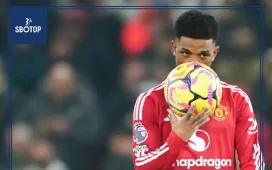



Andoni Iraola wants Liverpool to accept a little less control if it gets more players into positions to score. Speaking on 6 November 2026, ahead of a Premier League trip to Crystal Palace, the Liverpool head coach pointed to a problem that had become particularly obvious in a 1–0 home defeat by Arsenal. His team could reach the final third, get crosses away and accumulate shots, yet too few of those attacks ended with a clear chance. Iraola’s proposed change was specific. He wanted more players arriving in the penalty area and more attempts from close range, even if committing those extra bodies made matches harder to control.
Liverpool had scored four goals in their first five home league matches, equalling their lowest return at that stage of a season. They had also created the second-fewest big chances in the division when Iraola spoke. Two days later, Alexis Mac Allister, Florian Wirtz and Alexander Isak all scored in a 3–1 win at Selhurst Park. It was an immediate improvement in output. The question raised by Iraola’s remarks was whether Liverpool could produce that threat regularly, especially at Anfield, where opponents had already shown how effectively they could protect the centre of the pitch.
Seventeen shots exposed the problem against Arsenal
Liverpool attempted 17 shots against Arsenal and finished with none on target. It was the first time in 442 Premier League home matches, stretching back to the start of the available records in 2003, that they had failed to test the goalkeeper. Their attempts had a combined expected-goals value of 1.05. The volume of shooting suggested plenty of activity around Arsenal’s area, while the modest value of those chances told a different story about the positions from which Liverpool actually got their shots away.
Kai Havertz scored in the 16th minute, giving Arsenal an advantage to defend for most of the match. That game state matters. A team protecting a lead can allow possession in some areas while guarding the spaces closest to goal. The side chasing an equaliser may then spend long spells in the opposition half and still struggle to move defenders out of position. Liverpool kept finding opportunities to attempt a shot, but those opportunities seldom carried the threat that their territory might have suggested.
The pattern also extended beyond that afternoon. Before the Palace game, Liverpool’s 140 league shots ranked fifth in the division, while they were ninth for goals and 11th for expected goals. Their attempts were heavily concentrated around and beyond the edge of the area. Taken together, the numbers explain why another instruction to shoot would have addressed only a small part of the problem. The more consequential change would be creating openings from which the shooter had a better view of goal and fewer defenders in the way.
Iraola wants more players arriving when the ball arrives
Iraola’s argument concerned what Liverpool did once they were already in good positions. He said they needed to send more players into the box and reach the six-yard area more often. He also referred to the Champions League defeat at Fenerbahçe, suggesting Liverpool had sometimes been too concerned with controlling the game. They scored twice in Istanbul through Trey Nyoni and Isak but lost 3–2, having led in the first half and drawn level in the second. That result illustrated how differently questions of control and attacking threat can play out from one spell of a match to the next.
Committing another player has practical consequences. A wide player who reaches the byline can look for a striker at the near post, a runner arriving behind him or a teammate at the far post. When only one of those positions is occupied, defenders have fewer decisions to make. With several runners, someone has to follow the first movement while another defender accounts for the space it opens. The ball can then reach a player who is moving towards goal rather than waiting with a defender already beside him.
The timing of those runs matters as much as the number of players making them. Arrive too early and the defence can pick everyone up before the delivery. Arrive too late and the player on the ball may have to cross towards a lone striker or turn back to preserve possession. One possible way to apply Iraola’s ideas would be to have a midfielder follow the first run into the box a beat later, giving the ball carrier another target without crowding the same lane. The coach’s comments set out the objective, while the exact movements remain a tactical choice.
Isak’s scoring shows what better service could unlock
Isak had scored six of Liverpool’s 11 league goals when Iraola spoke. That return stood out in a team struggling to create clear opportunities and gave the coach a reason to focus on the supply around his striker. Iraola highlighted Isak’s ability to attack the channels, run into space and receive the ball cleanly when he drops towards it. Each quality gives Liverpool a different way to get through a defence, provided nearby players respond to the movement.
When Isak runs into a channel, an early pass can send him beyond a centre-back who is still turning. When he drops to receive, a teammate can run into the space he has just vacated. A compact defence can cope if the same player is asked to receive the ball, turn and finish through traffic. It has more to consider if Isak draws someone out and a second Liverpool player immediately attacks the gap. The benefit could be a better chance for Isak or an opening for whoever follows his movement.
The Palace result offered a welcome example of goals coming from more than one part of the team. Mac Allister scored in the 40th minute, Wirtz doubled the lead in the 54th and Isak added the third in the 89th. Eddie Nketiah replied from the penalty spot in stoppage time. Wirtz said afterwards that Liverpool had been efficient and that it had not felt as though they created many clear chances. His assessment is a reason to treat the scoreline carefully. Three goals showed the value of taking the opportunities available, while the longer-term question is how often Liverpool can create good ones.
The trade-off is most visible when Liverpool lose the ball
Every extra player who enters the penalty area leaves a position elsewhere. If a cross is cleared or a pass is intercepted, Liverpool must decide whether to press the receiver immediately or retreat and close the space behind them. A midfielder outside the box can help win a loose ball and sustain the attack. The same player may also be needed to cover an opposing runner. How Liverpool share those responsibilities will influence how much control they actually give up when they commit more players.
The match situation can change which risk is worth taking. At 0–0 against a deep defence, a late run into the box may provide a way to unlock a game that has settled into a predictable rhythm. When Liverpool are already ahead and the opposition is leaving players upfield, they may need someone to stay in position for the clearance. When they are behind, as they were against Arsenal, the value of drawing a defender away from goal can outweigh the comfort of making one more safe pass. Those decisions can vary within the same match.
This is where creativity becomes a collective task. A sharp pass matters, but the player making it needs a runner to give it purpose. A winger can beat a full-back, but the quality of the chance may depend on who arrives to meet the cutback. Isak can pull a centre-back into a channel, but someone must occupy the space in front of goal if the move goes wide. Iraola’s emphasis on arrivals puts responsibility on the players around the ball as well as the one delivering it.
A strong afternoon at Palace sets a test for Anfield
Liverpool’s scoring concerns had surfaced before Arsenal. After a goalless draw with Fulham in September, Iraola said his team had struggled to create enough chances to make the difference. He felt Liverpool controlled the second half better, yet that improvement brought no goal. The Arsenal defeat sharpened the same distinction between keeping a match manageable and forcing the opposition to defend genuine scoring opportunities. The Palace win added a more encouraging result to that sequence and gave Liverpool three different scorers on the same afternoon.
The clearest measure of progress will be what happens the next time an opponent protects the middle and lets Liverpool have the ball outside the area. More shots from six or eight yards, more cutbacks met by a runner and more deliveries that force defenders to turn towards their own goal would all reflect the change Iraola described. At Selhurst Park, Liverpool made their opportunities count. At Anfield, the task is to create them frequently enough that a frustrating afternoon can turn on a well-timed run and a pass into the box.
Also Read: