

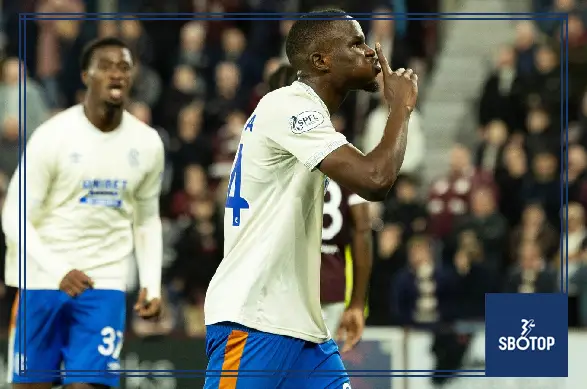
Olwethu Makhanya’s late header rescued Rangers a 2-2 draw at Hearts, denying the hosts a victory that had appeared within reach on an emotionally charged evening at Tynecastle. Derek McInnes returned to his former club to find an unforgiving reception, and his team needed a decisive intervention from their defender to avoid defeat.
Kevin Kelsy put Rangers ahead before Claudio Braga and Calvin Miller overturned the deficit after half-time. Hearts were approaching a memorable win when Makhanya struck in the 89th minute, changing the outcome without erasing the questions raised by the visitors’ performance.
The result left contrasting emotions. Rangers could appreciate their recovery while recognising their difficulties. Hearts had demonstrated their attacking quality and resilience, yet finished with the frustration of surrendering a lead so close to the final whistle.
McInnes Returns to an Unforgiving Reception
McInnes’ first match back at Tynecastle since leaving Hearts for Rangers in June provided the evening’s powerful backdrop. Home supporters booed his emergence from the tunnel, making their feelings unmistakable before the football had properly begun.
His departure had followed a season in which Hearts narrowly missed out on the Premiership title. That recent history gave the meeting additional intensity, with the visiting manager facing players and supporters familiar with his work.
Such circumstances can dominate discussion, but they do not explain every action on the pitch. Individual decisions, defensive positioning and finishing ultimately shaped this result more directly than the reception from the stands.
Nevertheless, the atmosphere added significance to every change in momentum. A Rangers goal offered McInnes immediate relief. Hearts’ response raised the possibility of a painful return. The late equaliser then ensured neither side could claim the definitive ending its supporters wanted.
Kelsy Punishes Hearts’ Early Mistake
Rangers took the lead in the 16th minute after Laurent Mendy lost possession near the Hearts penalty area. Kelsy combined with Ryan Naderi before finishing past Beau Reus, turning a defensive lapse into an important early advantage.
The goal rewarded quick cooperation between the forwards. Once possession changed hands, the exchange allowed Kelsy to attack before Hearts could restore their defensive shape.
For the hosts, conceding in that manner created an immediate test of composure. An emotionally significant fixture can become harder to manage when enthusiasm produces hurried decisions after a setback.
Hearts needed to continue applying pressure without allowing their frustration to expose them again. Rangers, meanwhile, had an opportunity to make the contest less frantic by retaining possession and forcing the home side to work for openings.
The visitors had earned the lead through an efficient attacking action. Turning that lead into sustained control would prove a more difficult task.
Hearts Keep Searching for a Response
Hearts did not disappear from the contest after conceding. Braga tested Ivor Pandur, while Sabah Kerjota and Miller also threatened as the hosts tried to find a route back.
Their first half brought an additional disruption when Rogers Mato pulled up and was replaced by Stephen Kingsley. The enforced change complicated an evening already demanding a response on the scoreboard.
Despite their efforts, Hearts reached the interval behind. Their attacking involvement had kept the match competitive, but the finishing action required to equalise remained missing.
The challenge at half-time was therefore practical. Hearts needed greater precision around goal while maintaining enough defensive balance to prevent Rangers extending their advantage.
Being competitive and being effective are different achievements. The hosts had shown enough to suggest an equaliser was possible, but possibility alone would not alter the score. Their response after the restart supplied the decisive improvement.
Braga Gives the Comeback Its Starting Point
Braga equalised three minutes into the second half, finishing from close range after Malachi Fagan-Walcott headed a free-kick back across goal.
The sequence demonstrated the value of keeping an attacking delivery alive. The initial ball did not need to produce a direct attempt. Redirecting it forced Rangers to defend a second movement, and Braga positioned himself to provide the final touch.
An equaliser so soon after the interval can change the demands placed on both teams. Hearts no longer needed to chase the match from behind. Rangers had to recover their organisation while responding to renewed home pressure.
That shift did not make another Hearts goal inevitable. It did, however, remove the security the visitors had carried into the break.
For Braga, the finish also reflected an essential attacking habit: remaining involved until a move is completed. Close-range goals often appear straightforward, but reaching the correct space at the correct moment is what makes them possible.
Miller Completes a Rapid Turnaround
Hearts moved ahead in the 57th minute. Tomas Magnusson recovered possession and released Braga down the left, with the forward’s subsequent involvement creating the opening for Miller to finish low past Pandur.
Within nine minutes of their equaliser, the hosts had transformed the match. Rangers’ first-half advantage had disappeared, replaced by the urgent need to rescue a result.
The second goal illustrated the danger of losing possession against opponents ready to advance quickly. Once Hearts moved forward, Rangers had limited time to reorganise and protect the spaces around their penalty area.
Miller’s contribution was the decisive finish, but the attack depended on several connected actions: winning the ball, recognising the forward pass and supporting the move.
That combination gave Hearts a deserved platform from which to pursue victory. Their next responsibility was different again: preserving their attacking threat while managing the risks associated with defending a narrow lead.
The Goalkeepers Keep the Outcome Open
Both goalkeepers remained important as the match progressed. Reus denied substitute Badredine Bouanani and later dealt with a long-range effort from Dan Neil. At the other end, Pandur stopped Braga from adding another goal.
Those interventions helped keep the score at 2-1 during a period when either a Hearts third or a Rangers equaliser would have changed the closing stages considerably.
For Hearts, the possibility of extending their lead offered the clearest route to a more comfortable finish. A single-goal advantage leaves an opponent within reach, regardless of how convincing the leading side has looked.
For Rangers, remaining close enough to recover was essential. Their attacking play did not need to become consistently dominant for one successful delivery to change the outcome.
That is the tension of a narrow lead: control can be meaningful without ever becoming complete protection. Hearts had created their advantage, but Rangers still possessed a route back into the match.
Makhanya Delivers the Late Intervention
Bouanani supplied that route with a free-kick from the left. Makhanya met the delivery and sent his header into the far corner via the post, rescuing Rangers with normal time almost exhausted.
There was still an opportunity for an even more dramatic finish. Dujon Sterling had a late chance to put Rangers ahead, but his contact directed the ball towards Reus rather than producing a winning goal.
Makhanya’s contribution showed how quickly a defender can alter a match’s attacking story. His opportunity required judgement of the delivery, an effective aerial challenge and sufficient direction on the header.
For Hearts, the concession was particularly painful because of its timing. There was little opportunity to rebuild the lead they had worked hard to establish.
Rangers’ relief was understandable, although the equaliser should be assessed alongside the performance that made it necessary. Persistence secured a point; it did not remove the difficulties encountered before it.
A Result That Invites Different Judgements
Afterwards, Hearts head coach Wouter Vrancken expressed satisfaction with his team’s performance while regarding the draw as two points lost. McInnes acknowledged shortcomings in Rangers’ display and suggested a late winner would have been an unfair reflection of the contest.
Those assessments captured the distinction between outcome and performance. A team can leave disappointed despite playing well, while another can welcome a result without being satisfied with how it played.
Hearts had evidence that their approach could trouble Rangers. Their recovery showed attacking coordination and the ability to respond after conceding.
Rangers demonstrated persistence, but their second-half difficulties raised questions about managing pressure and protecting an advantage. Identifying the precise causes would require examination of tactical instructions and individual decisions.
Neither the comeback nor the equaliser offers a complete verdict on either team’s season. Both provide useful evidence about strengths to retain and weaknesses to address.
A Shared Point, With Unequal Satisfaction
The draw left Rangers second, four points behind Celtic and four ahead of Hearts at the end of the evening. Hearts also preserved their unbeaten home league record, which extended to 26 matches.
Those standings explain the practical importance of Makhanya’s goal. Rangers avoided defeat and prevented Hearts from reducing the gap between them through a home victory.
For Hearts, maintaining their home record offered consolation, but it could hardly replace the satisfaction of winning this particular fixture.
McInnes departed with a point after a return full of pressure and shifting fortunes. Vrancken was left to balance encouragement about his players’ response against disappointment at the late concession.
Makhanya supplied the final decisive act. His header ensured an evening that had seemed ready to belong to Hearts ended with Rangers sharing the reward—and with both teams carrying unfinished business into their next match.
Also Read: