

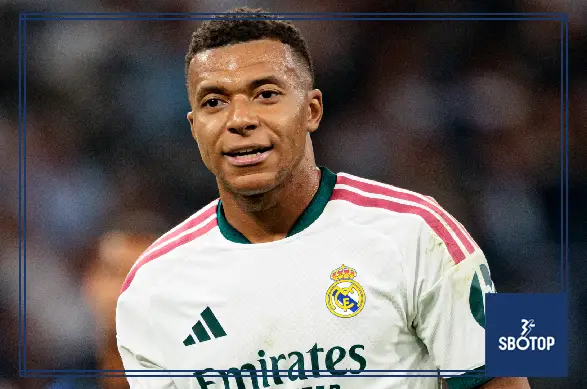
Kylian Mbappe has addressed a bizarre social media trend that has repeatedly portrayed him as a dictator, admitting that he can understand the humorous side of the memes while also questioning the lack of historical and human awareness behind some of the comparisons. The Real Madrid and France forward has become the subject of a wave of AI-generated images and online jokes depicting him in military uniforms, sitting on thrones, or appearing alongside controversial historical leaders. The trend has circulated widely on social media and became particularly visible around France’s 2026 World Cup campaign.
Mbappe has not completely rejected the humor surrounding the trend. Instead, his response has been more nuanced. He recognizes that many supporters are simply making jokes, but he believes comparisons with figures associated with mass suffering can cross a line.
For one of football’s most recognizable stars, the episode highlights the complicated relationship between elite athletes and social media. A joke can spread globally within minutes, taking on a life of its own long after its original context has disappeared.
Mbappe Gives a Measured Response
Rather than reacting angrily to every meme, Kylian Mbappe acknowledged that there is a humorous element to the phenomenon.
His comments suggest that he understands how football culture works online. Players are regularly transformed into exaggerated characters through memes, edited photographs, parody videos, and other forms of digital entertainment.
Mbappe is hardly the first footballer to become the target of this kind of humor.
However, he drew attention to an important distinction. While exaggerating a player’s dominance can be harmless, comparing a footballer with historical figures responsible for repression, violence, or widespread suffering can carry a different meaning.
That was the central point behind Mbappe’s criticism.
He explained that the jokes can be light-hearted, but said the comparisons can also demonstrate a lack of political and human awareness among some people.
The Viral Dictator Meme Explained
The trend has presented Mbappe in a deliberately exaggerated authoritarian role.
Images shared online have placed his face onto bodies wearing military clothing or have positioned him alongside historical dictators. Some versions have portrayed him as a powerful ruler sitting on a throne, reinforcing the joke that he somehow controls everything around him.
The imagery is obviously designed to exaggerate his influence and status.
Mbappe is one of the most powerful figures in modern football. His performances, global profile, and influence have made him an easy target for jokes suggesting that he possesses extraordinary control over events.
Social media often turns real characteristics into fictional narratives.
A footballer who dominates matches can suddenly become a “king.” A player who takes responsibility for important decisions can become a “president.” A star with enormous influence can become a “dictator.”
The humor comes from exaggeration.
But Mbappe’s response suggests that historical context should not completely disappear from the joke.
Why Mbappe Thinks the Comparison Can Go Too Far
The central concern expressed by Mbappe is not necessarily that people are making jokes about him.
Instead, his comments focus on the historical figures being used in those jokes.
Dictators are not simply fictional villains or cartoon characters. Many of the leaders referenced in memes are associated with political repression, violence, persecution, and suffering on a massive scale.
Mbappe pointed out that being compared to people who caused such misery is uncomfortable because he has obviously not committed the kinds of acts associated with those historical figures.
His response therefore creates an interesting distinction between intention and historical meaning.
Someone sharing a meme may have no intention of glorifying a dictator or minimizing historical suffering. They may simply be joking about Mbappe’s influence.
Nevertheless, the imagery can still carry a weight that exceeds the original joke.
Social Media Has Changed Football Humor
Football and humor have always been closely connected.
Supporters have traditionally used chants, banners, cartoons, and jokes to celebrate their players or mock their rivals.
Social media has dramatically expanded that culture.
A meme created by one supporter can reach millions of people across multiple platforms within hours. Artificial intelligence has made the process even easier, allowing users to create increasingly sophisticated images and videos.
Mbappe’s experience demonstrates how quickly an online joke can become part of a player’s public identity.
The dictator meme is not necessarily a reflection of Mbappe’s real personality. Instead, it represents an exaggerated internet character built around perceptions of his influence.
Once such a character becomes popular, it can be difficult for the individual at the center of it to control how the narrative develops.
Mbappe Understands the Difference Between Banter and Serious Comparisons
One of the most interesting aspects of Mbappe’s comments is that he did not completely reject the joke.
His response was not a demand for every meme to disappear.
Instead, he recognized that some people are simply having fun.
This distinction is particularly relevant to football dressing rooms, where teasing between teammates is common.
Players regularly give each other nicknames, make jokes, and use exaggerated language.
Mbappe appears comfortable with that type of banter when the intention is clearly harmless.
The issue becomes more complicated when historical figures associated with extreme violence are used as the foundation for the joke.
For Mbappe, the context matters.
Ousmane Dembele Gets a Different Reaction
France teammate Ousmane Dembele has also participated in the joke by using the nickname “Mobut,” a reference to Mobutu Sese Seko, the former leader of Zaire, now the Democratic Republic of the Congo.
Mbappe treated Dembele’s use of the nickname differently from the broader online trend.
He explained that Dembele simply picked up the joke from social media and used it for laughs.
The exchange highlights how relationships affect the way jokes are interpreted.
A nickname between teammates who understand each other’s personalities can have a completely different meaning from a viral meme circulated by millions of strangers.
Mbappe’s response suggests that he sees Dembele’s use of the nickname as friendly dressing-room humor rather than a serious comparison.
The Meme Has Become Part of Mbappe’s Online Image
The dictator narrative has developed into a recurring theme around Mbappe.
Whenever discussions emerge about his influence, leadership, or role within a club, social media users have sometimes returned to the same joke.
This reflects the unusual level of attention surrounding the French forward.
Mbappe has been one of football’s biggest stars for years. Every aspect of his career is heavily scrutinized, from his performances and transfers to his relationships with teammates and clubs.
That visibility makes him particularly attractive to meme culture.
The bigger the player, the bigger the potential for exaggeration.
His Global Profile Makes Him an Easy Target
Mbappe’s fame extends far beyond football.
He is recognized across different countries and generations, making memes involving him more likely to travel across social media platforms.
His career has included major international achievements, high-profile club moves, and constant media attention.
As a result, even relatively simple jokes can become international trends.
The dictator meme is an example of how football narratives can evolve online.
A joke that begins in one community can quickly be adopted by supporters who have no knowledge of its original context.
Eventually, the meme can become recognizable in its own right.
AI Has Added a New Dimension
Artificial intelligence has made modern meme culture considerably more sophisticated.
Instead of simply adding text to a photograph, users can now create images that appear realistic enough to place famous athletes in entirely fictional situations.
That technology has contributed to the spread of the Mbappe dictator imagery.
The images can make the joke more visually convincing, which may help them attract attention and encourage further sharing.
At the same time, realistic AI-generated content raises questions about context and responsibility.
When an image looks authentic, viewers unfamiliar with the joke may not immediately understand that it is fictional.
That makes awareness increasingly important in the digital era.
The Difference Between Influence and Power
At the heart of the joke is the idea that Mbappe possesses enormous influence.
As a superstar footballer, he naturally has significant visibility and commercial power.
He is also a major figure within the France national team and one of the most closely followed players at Real Madrid.
But sporting influence should not be confused with political power.
The meme deliberately blurs that distinction for comedic effect.
Mbappe’s comments bring the conversation back to reality.
Being influential inside a football environment is fundamentally different from controlling a country or exercising authoritarian political power.
That distinction can become lost when social media exaggeration continues for long enough.
The Role of Historical Awareness
Mbappe’s comments also raise a broader issue about historical awareness.
The internet often removes context from historical figures.
A person who caused enormous suffering can become a recognizable image, costume, or meme without viewers understanding the events connected to that individual.
For younger audiences especially, historical figures may be recognized visually without their full history being understood.
Mbappe’s argument is that this can sometimes reflect a lack of awareness.
Humor does not necessarily require abandoning historical knowledge.
People can understand the joke while still recognizing the seriousness of the figures being referenced.
Footballers Have Limited Control Over Online Narratives
One of the challenges facing modern footballers is that they cannot control everything said about them online.
Thousands of posts can appear every day.
Some will be positive, others critical, and many will be humorous.
Trying to respond to every post would be impossible.
Mbappe’s approach appears to be selective.
He has acknowledged the joke, explained why some elements make him uncomfortable, and continued focusing on football.
That may be the most practical response for a player whose online presence is constantly being discussed.
Also Read: