

Tottenham Hotspur’s difficult start to the 2026/27 Premier League season continued as they were held to a frustrating 0-0 draw by Everton at Tottenham Hotspur Stadium.
Despite enjoying encouraging spells of possession and producing considerable pressure during the opening stages, Spurs were unable to find a way past a disciplined Everton defence.
The result leaves Tottenham still without a league victory after their first four matches and, remarkably, without a single Premier League goal. It is the first time in the club’s history that Tottenham have failed to score in each of their opening four league matches of a season.
Everton, meanwhile, maintained their unbeaten beginning to the campaign. David Moyes’ side had to withstand a difficult opening period but grew into the contest and created opportunities of their own after half-time.
The Toffees ultimately left north London with a point, while Tottenham were once again left searching for answers in the final third.
Spurs Start With Urgency
Tottenham knew they needed an immediate response after failing to win their opening three Premier League matches.
The hosts started with considerably more energy than they had shown in some of their previous fixtures.
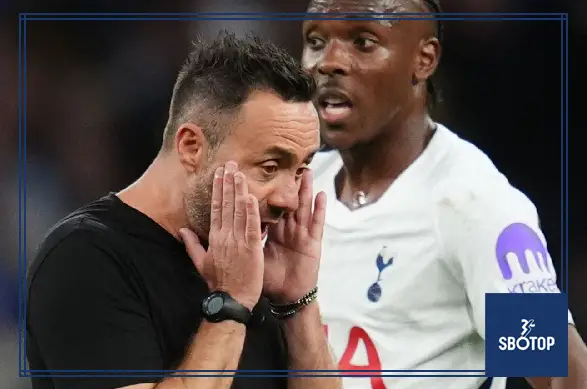
Roberto De Zerbi’s side pushed Everton backwards from the opening whistle, moving the ball quickly and attempting to create openings around the visitors’ penalty area.
The pressure nearly paid off after only five minutes.
Andy Robertson delivered a free-kick toward the Everton box, and Jan Paul van Hecke found himself in a promising position close to goal.
The Tottenham defender managed to get his head to the delivery but sent the ball over the crossbar.
It was a major opportunity and ultimately proved to be Tottenham’s best chance of the opening half.
The early pressure suggested Spurs could finally end their extraordinary scoring drought.
However, Everton’s defensive structure gradually became more effective.
Everton Weather the Early Storm
Everton’s players initially struggled to escape their own half. James Tarkowski later admitted that the visitors found Tottenham’s opening 20 minutes extremely difficult, with Spurs applying considerable pressure.
The Toffees nevertheless remained organized.
Their defenders protected the penalty area and prevented Tottenham’s attacking players from finding enough room to produce clean finishes.
Vitalii Mykolenko was particularly important on the left side, helping Everton maintain their defensive shape while also providing an outlet whenever possession was recovered.
As the first half progressed, Everton began to settle.
Tottenham still controlled much of the ball, but the intensity of their attacks diminished.
That allowed Moyes’ team to move higher up the pitch and eventually create opportunities of their own.
Tottenham Struggle to Turn Possession Into Chances
One of the major themes of the match was the difference between possession and attacking productivity.
Tottenham enjoyed periods in which they moved the ball efficiently across midfield, but their final actions lacked the precision required to seriously threaten Jordan Pickford.
The hosts struggled to consistently put their central forwards into dangerous positions.
Crosses were often dealt with by Everton’s defence, while passes into the penalty area lacked the quality needed to create clear shooting opportunities.
That problem has been visible throughout Tottenham’s opening fixtures.
The club have invested heavily in their squad, bringing in several attacking and creative players during the summer, but those additions have yet to translate into Premier League goals.
Against Everton, the problem became particularly stark.
Spurs had possession.
They had attacking players.
But they could not consistently create high-quality chances.
Fernandes Finally Tests Pickford
Tottenham’s first shot on target arrived shortly after half-time.
Mateus Fernandes produced a low effort that travelled directly toward Pickford.
The Everton goalkeeper gathered comfortably.
The reaction from the home supporters was telling.
Rather than celebrating normally, sections of the Tottenham crowd responded with ironic cheers because it was the club’s first effort on target.
That moment illustrated the frustration building inside the stadium.
Tottenham had reached the second half without seriously testing Pickford, despite controlling significant portions of the match.
The lack of attacking threat was becoming impossible to ignore.
Everton Begin to Threaten
While Tottenham struggled to make their possession count, Everton gradually became more dangerous.
Thierno Barry provided a physical presence in attack and began finding opportunities around the Tottenham penalty area.
The visitors came close when Barry attacked a cross at the back post.
His header was directed toward goal, but Antonin Kinsky managed to make the save.
The Tottenham goalkeeper was becoming increasingly important.
Everton also benefited from some uncertainty in Tottenham’s build-up play.
On one occasion, Kinsky’s distribution went directly to Kiernan Dewsbury-Hall.
The Everton midfielder had an opportunity to punish the mistake, but his shot went straight at the goalkeeper.
It was another warning for the home side.
Kinsky Keeps Spurs Level
Kinsky’s performance ensured Tottenham remained in the contest.
The goalkeeper was called upon several times as Everton discovered more space during the second half.
The contrast between the two teams became increasingly noticeable.
Everton were not dominating possession, but they were finding ways to create moments of danger.
Tottenham, by comparison, were controlling the ball without producing enough clear opportunities.
That made the match increasingly uncomfortable for the home side.
Every Everton attack carried the possibility of an opening, while Spurs’ possession often ended without a shot.
De Zerbi Turns to His Bench
With Tottenham still unable to find a breakthrough, De Zerbi turned to his substitutes.
Mathys Tel was introduced during the second half as Spurs attempted to add greater attacking presence.
Other changes were also made as the home side searched for a way to alter the rhythm of the match.
The substitutions briefly increased Tottenham’s urgency.
Savio became involved in attacking moves, while Lucas Bergvall and other midfielders pushed higher.
However, Everton remained difficult to break down.
The visitors were increasingly comfortable defending their penalty area and attempting to counter whenever Tottenham committed additional players forward.
A Late Chance for Bergvall
Tottenham’s clearest opportunity to win the match arrived in the closing stages.
Jordan Pickford made a mistake with his distribution, giving Tottenham an unexpected opening.
Lucas Bergvall quickly took advantage and fired toward goal.
This time, Pickford recovered brilliantly.
The Everton goalkeeper produced an excellent save to deny Bergvall and preserve the 0-0 scoreline.
It was an important moment for Everton.
Pickford had not been heavily tested for long periods, but when Tottenham finally created a genuine opportunity, he responded decisively.
The save ensured that Everton would leave with a point.
Pickford and Everton Defence Stand Firm
Everton’s defensive performance deserves significant credit.
The Toffees were forced to absorb pressure early in the match, but they remained compact and disciplined.
Tarkowski and Mykolenko helped limit Tottenham’s options, while Pickford provided security whenever the defensive line was breached.
The visitors also defended crosses effectively.
Tottenham attempted to use the width of the pitch, but Everton’s defenders were usually able to position themselves between the ball and the attacking players.
That prevented Spurs from turning their possession into clear-cut chances.
It was not a spectacular defensive performance, but it was a highly functional one.
Spurs Set an Unwanted Club Record
The final whistle confirmed an unwanted piece of Tottenham history.
Spurs have now gone through their first four Premier League matches of the season without scoring.
According to Sky Sports, it is the first time the club have failed to score in each of their opening four league matches of a campaign. Their goalless sequence has also stretched beyond 400 minutes.
That statistic provides a clear indication of the scale of Tottenham’s attacking problem.
It is one thing for a team to struggle to win games.
It is considerably more difficult to win when the team cannot score at all.
Tottenham have collected points through draws, but their inability to find the net means every match becomes dependent on keeping a clean sheet.
Against Everton, they achieved the defensive part of that equation but could not produce the goal required for victory.
The Solanke Problem
Dominic Solanke’s involvement was another talking point.
The striker was expected to provide a focal point for Tottenham’s attack, but he struggled to influence the match.
Sky Sports’ analysis noted that Solanke managed only 19 touches and failed to register a shot.
That is a particularly concerning statistic for a player occupying the central striker position.
Tottenham have several creative players capable of supplying chances, but those players need an effective target in the penalty area.
If Solanke is isolated, Spurs’ attacking structure becomes easier for opponents to defend.
De Zerbi therefore faces the challenge of finding a system that brings the striker more consistently into the game.
De Zerbi’s Tactical Challenge
The Tottenham manager has inherited an expensively assembled squad, but finding the right balance remains a major task.
The team contains several players capable of playing between the lines, operating from wide areas or dropping into midfield.
The difficulty is making those individual qualities work together.
Against Everton, Tottenham often looked crowded in some areas while lacking players inside the penalty box.
The result was a lot of circulation without enough penetration.
De Zerbi has already emphasized the importance of positional discipline.
After the match, he explained an exchange with Tel by saying that the striker needed to face the goal and remain in central attacking positions when the team’s creative players were operating around him.
That explanation provides some insight into the manager’s attacking philosophy.
Everton’s Resilience Impresses Moyes
Moyes was pleased with Everton’s ability to withstand Tottenham’s pressure, although he admitted his side could have performed better with the ball.
The Everton manager acknowledged that Spurs were excellent during the opening 20 minutes and forced his players into a defensive approach.
He also stressed that Everton knew they needed to improve their possession game, even if there were matches where resilience would be necessary.
That assessment accurately describes the match.
Everton did not dominate.
But they defended effectively enough to prevent Tottenham from capitalizing on their early pressure.
Everton Remain Unbeaten
The point at Tottenham extended Everton’s unbeaten start to the Premier League season.
The Toffees have demonstrated a willingness to adapt to different match situations.
Against Tottenham, they had to spend long periods without the ball.
Rather than allowing that to destabilize them, Everton maintained their shape and waited for opportunities.
They also showed enough attacking threat to suggest they could have won the match.
Brennan Johnson, facing his former club, missed a significant opportunity in the second half when he sent an effort over the crossbar.
That chance could have produced a dramatic away victory.
Instead, Everton settled for a point.
A Frustrating Afternoon for Tottenham Supporters
The atmosphere at the Tottenham Hotspur Stadium reflected the team’s attacking struggles.
Supporters had arrived hoping that a home fixture against Everton would finally produce Tottenham’s first league goal and victory.
Instead, they watched another goalless performance.
The home crowd became increasingly frustrated as the match progressed.
The ironic reaction to Fernandes’ shot on target was one of the clearest indications of that frustration.
At full-time, Tottenham players were booed by sections of the home support.
For a team that invested heavily during the summer, the reaction demonstrates how quickly expectations can turn when results and performances fail to meet them.
Everton’s Defence Provides a Blueprint
For other Premier League teams preparing to face Tottenham, Everton’s performance could offer a useful blueprint.
Moyes’ team demonstrated that Tottenham can be frustrated by maintaining a compact defensive structure and limiting central spaces.
The key was not simply defending deep.
Everton also attempted to disrupt Tottenham’s rhythm whenever possible.
Their midfielders worked to prevent Spurs from playing comfortably between the lines, while the defensive unit remained alert to crosses and through balls.
Tottenham were therefore forced into wider areas and long spells of possession that did not necessarily lead to clear opportunities.
Also Read:
- SBOTOP: Ross County 0-3 Hibernian: Hibs Ease Past Staggies to Book Scottish League Cup Semi-Final Spot
- SBOTOP West Ham 2-1 London City Lionesses: Gago and Asseyi Fire Hammers to First WSL Victory of the Season
- SBOTOP: Chelsea 2-2 Hull City: Unbeaten Tigers Hold Blues to Thrilling Draw After Defensive Lapses Cost Chelsea Victory