

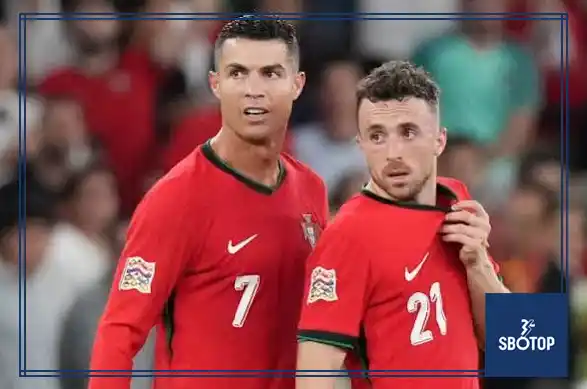
The football world has once again been reminded that rivalry and emotion can sometimes cross the line into unacceptable territory. Cristiano Ronaldo has called for lifetime bans after chants referencing the late Diogo Jota were aimed at Ruben Neves during a football match, sparking widespread criticism and renewed debate about supporter behaviour.
The incident has generated a strong reaction because of the personal nature of the chants. Jota, a Portugal international and former teammate of several members of the national squad, was widely respected within Portuguese football. His death left teammates, supporters and the wider football community mourning a player remembered for his talent, determination and character.
Ronaldo, Portugal’s captain and one of the country’s most influential sporting figures, has now used his position to demand tougher consequences for supporters who cross serious boundaries. His comments underline a growing concern within football that certain forms of chanting cannot simply be dismissed as part of the atmosphere surrounding a heated match.
The controversy has also placed attention on Ruben Neves, who was targeted by the chants. Neves shared a close professional relationship with Jota and, like many Portugal internationals, was connected to the player through both club and international football.
Ronaldo Calls for Lifetime Bans
Ronaldo’s response was direct. Rather than treating the incident as ordinary football banter, the Portugal captain argued that supporters responsible for such behaviour should face severe punishment.
The call for lifetime bans reflects the seriousness with which Ronaldo views the incident. Football stadiums have traditionally provided a place where supporters can express passion, frustration and rivalry, but there are boundaries that many believe should never be crossed.
For Ronaldo, references to a deceased player appear to have moved beyond competitive rivalry. His position suggests that football authorities should distinguish between ordinary provocation and behaviour that causes genuine personal distress.
Lifetime bans would represent one of the strongest possible punishments available to clubs and football authorities. Such a sanction would prevent identified offenders from attending matches in the future and would send a powerful message about acceptable behaviour.
Whether football authorities ultimately adopt punishments of that severity is a separate question. However, Ronaldo’s comments have ensured that the debate is unlikely to disappear quickly.
The Emotional Context Behind the Chants
To understand why the incident has provoked such a strong reaction, it is important to consider the emotional circumstances surrounding Jota’s death. Diogo Jota was not simply another professional footballer. He was an established Portugal international who had built a significant career at both domestic and international level. His relationships with teammates made his death particularly painful for the Portugal squad.
For players such as Neves, the memory of Jota is likely to remain deeply personal. They shared dressing rooms, training sessions, international camps and important moments on the pitch.
That context changes the nature of a chant. Football supporters regularly use songs to unsettle opponents, but invoking a personal tragedy can have an entirely different emotional impact.
The reaction from Ronaldo therefore reflects a broader discussion about the responsibility that comes with being part of a football crowd. Passion is an important part of the sport, but passion does not automatically justify every form of expression.
Ruben Neves Put at the Centre of the Controversy
Ruben Neves has found himself at the centre of an uncomfortable situation despite not being responsible for the incident.
The Portugal midfielder has developed a reputation for his professionalism and his commitment to the national team. His connection with Jota makes the chants particularly sensitive.
Footballers are accustomed to being criticised, mocked and targeted by opposing supporters. It is part of the environment in which professional players operate. Yet there is a distinction between attacking a player’s sporting performance and referring to deeply personal circumstances.
Neves has not needed to manufacture a rivalry with supporters for the incident to attract attention. The chants themselves became the story, and the subsequent reaction from Ronaldo elevated the discussion to a wider issue concerning football culture.
The situation demonstrates how quickly events inside a stadium can move beyond the pitch. What may begin as a chant among a section of supporters can become a national conversation once video footage, reports and reactions circulate publicly.
Why Ronaldo’s Intervention Matters
Ronaldo occupies a unique position in Portuguese football.
As the Portugal captain and one of the most recognisable footballers in history, his words carry considerable influence. When he speaks about the treatment of a fellow international, the comments naturally attract international attention.
His intervention also sends a message to younger players and supporters. Ronaldo has spent decades playing in some of the most intense football environments in the world, experiencing hostile atmospheres and fierce rivalries.
That experience gives additional context to his argument. He is not suggesting that football should become emotionless. Instead, his response draws attention to the difference between competitive hostility and conduct that crosses a personal boundary.
His call for lifetime bans can therefore be viewed as part of a wider demand for accountability inside stadiums.
Football Rivalries Need Boundaries
Rivalry is one of football’s defining characteristics.
Derbies and major matches depend heavily on atmosphere. Supporters sing, wave flags, create choreographed displays and attempt to unsettle opposing teams. Players frequently feed off that energy, while clubs rely on passionate support to create memorable occasions.
However, rivalry also creates a difficult challenge for football authorities.
Where should the line be drawn?
Some chants are insulting but remain within the traditional culture of football. Others involve discrimination, threats or deeply personal references. The latter can have consequences that extend far beyond the ninety minutes of a match.
The controversy involving Jota and Neves has brought that distinction into sharp focus.
It is possible to support passionate football culture while also arguing that certain behaviour should have consequences. The challenge for authorities is creating rules that are clear enough to be enforced consistently.
The Responsibility of Supporters
Supporters play a central role in football’s identity. Without fans, the atmosphere surrounding major matches would be dramatically different.
That influence also comes with responsibility.
Modern stadiums contain thousands of people, while incidents can be recorded instantly on mobile phones and distributed through social media. A chant that might once have remained inside a stadium can now reach millions of people within hours.
This has changed the consequences of supporter behaviour.
Fans who engage in offensive chanting may no longer be anonymous within a large crowd. Clubs and authorities can potentially use stadium surveillance, ticketing information and digital evidence to identify individuals involved in serious incidents.
Ronaldo’s call for lifetime bans reflects the belief that supporters should understand that actions have consequences.
The issue is not about eliminating emotion from football. It is about ensuring that emotion does not become an excuse for behaviour that causes unnecessary harm.
The Wider Impact on Portuguese Football
The incident has also created an uncomfortable moment for Portuguese football.
Portugal has built a strong footballing identity around its national team, with generations of players becoming symbols of national pride. Ronaldo is the most prominent figure from that tradition, while players such as Neves and Jota have represented the next generation.
The national team environment is often described as a close-knit community because players spend extended periods together during international competitions.
The death of one of their teammates therefore has significance far beyond club football.
When an incident involving Jota’s name occurs at a match, it inevitably affects perceptions of the football culture surrounding Portuguese players and supporters.
That makes the response particularly important. How clubs, governing bodies and fans react can influence the standards expected at future matches.
Could Lifetime Bans Become More Common?
The demand for lifetime bans raises a broader question about punishment in football.
Clubs already have mechanisms for banning supporters who engage in serious misconduct. Depending on the circumstances and jurisdiction, sanctions can include stadium bans, fines, criminal proceedings or other restrictions.
A lifetime ban is considerably more severe.
Supporters’ groups may argue that disciplinary systems should distinguish between different levels of misconduct. Authorities, meanwhile, may believe that particularly serious behaviour requires a stronger response.
The debate is unlikely to be settled by one incident.
Instead, football may increasingly face pressure to develop clearer policies surrounding abusive chants, discriminatory behaviour and personal attacks.
Technology could also play an important role. Improved stadium surveillance and identification systems could make it easier to establish who participated in serious incidents.
The effectiveness of any punishment, however, depends on consistent enforcement.
Social Media Has Changed the Conversation
The rise of social media has transformed the way football controversies develop.
In previous generations, an offensive chant might have been discussed primarily among people who attended a match. Today, videos can circulate globally within minutes.
That creates both advantages and challenges.
On one hand, footage can provide evidence and make it easier for authorities to identify misconduct. On the other, social media can amplify outrage before all of the circumstances are fully established.
The incident involving the chants aimed at Neves illustrates how quickly football-related controversies can move from a stadium to a global audience.
Ronaldo’s response further increased the attention because of his international profile.
The result is that supporter behaviour is now scrutinised more closely than ever.
Protecting the Memory of Diogo Jota
At the heart of the controversy remains the memory of Diogo Jota.
For his former teammates and supporters, Jota’s legacy is likely to be defined by his football career, his achievements and the personal relationships he formed during his time in the sport.
The controversy surrounding chants using his name has shifted attention away from those positive memories.
That is one reason why Ronaldo’s reaction has resonated with many people. The Portugal captain’s position focuses attention on the importance of treating the memory of a deceased player with dignity.
Football has experienced similar debates before, with tragedies and deaths sometimes becoming part of supporter rivalries in deeply uncomfortable ways.
The challenge is ensuring that remembrance remains separate from attempts to provoke opposing players.
What the Incident Says About Modern Football
The episode highlights a complicated reality about modern football.
The sport is simultaneously becoming more global, more commercial and more closely monitored. Yet the traditional culture of supporter rivalry remains deeply rooted.
Clubs want passionate crowds, while authorities want safe and respectful environments.
Those objectives can coexist, but only if boundaries are understood.
Ronaldo’s intervention has provided a high-profile example of a player demanding that football take those boundaries seriously.
His call for lifetime bans may generate debate over proportionality and enforcement, but it has also forced attention onto an issue that clubs and governing bodies cannot easily ignore.
Also Read: