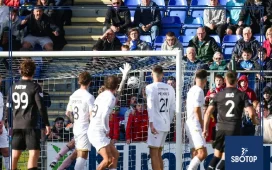


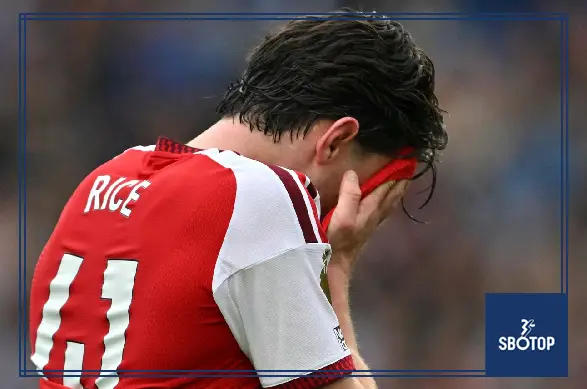
Arsenal’s impressive opening to the Premier League season came to an abrupt end at the Amex Stadium as Brighton & Hove Albion produced a commanding 3-0 victory over the defending champions. The result not only handed Arsenal their first league defeat of the campaign but also prompted manager Mikel Arteta to deliver one of his strongest assessments of the team’s performance in recent months.
Arteta accused his players of failing to “respect the game” after Arsenal struggled to match Brighton’s intensity, physicality and technical execution. The defeat ended a run of eight consecutive Premier League victories and exposed several areas that the Arsenal manager believes must be corrected if his team is to maintain its challenge at the top of the table.
For a side that had begun the campaign with such authority, the performance represented a significant change in standards. Arsenal were unable to impose their usual control, struggled to escape Brighton’s pressure and repeatedly surrendered possession in dangerous areas.
The result therefore provides Arteta with a difficult but potentially valuable lesson as the champions prepare for the next stage of the season.
Brighton Set the Tone From the Opening Minutes
Brighton’s victory was built on an aggressive approach that prevented Arsenal from settling into their preferred rhythm.
The home side consistently challenged Arsenal for first and second balls, pressed their defenders and midfielders and forced mistakes during the visitors’ attempts to build attacks from deep.
Arteta later explained that Brighton appeared to be operating at a different level when it came to the basic elements of the match. His criticism was particularly focused on duels, loose balls and the technical quality of Arsenal’s possession.
That assessment was reflected in the way the game developed.
Arsenal normally look to control matches through possession, positional discipline and careful circulation. Against Brighton, however, that structure repeatedly broke down.
The Seagulls did not allow Arsenal’s midfield enough time to dictate play. Instead, Brighton’s players aggressively closed passing lanes and competed for every loose ball.
According to analysis cited by Sky Sports, Brighton won possession in the final third nine times, a remarkably high figure and the most any team had managed against Arsenal across the current and previous Premier League campaigns.
That pressure created the platform for Brighton to take control.
Arsenal Failed to Match Brighton’s Intensity
The biggest issue for Arsenal was arguably not one individual mistake but a collective inability to respond to Brighton’s intensity.
Arteta’s comments made it clear that he believed the problem went beyond tactics.
When a team loses physical contests repeatedly, its tactical structure can quickly become difficult to maintain. Arsenal found themselves defending situations that should ordinarily have been prevented much earlier.
Brighton repeatedly attacked second balls and loose possession, allowing Fabian Hurzeler’s team to sustain pressure in advanced areas.
For Arsenal, the problem became particularly obvious when attempting to play out from the back.
Brighton’s man-to-man pressure meant that Arsenal’s defenders and midfielders were frequently forced into difficult decisions. Passing options disappeared quickly, while misplaced touches created opportunities for the hosts.
Arteta described Arsenal’s technical performance in their own half as extremely poor and linked those errors to the team’s failure to follow the principles required against an aggressive pressing side.
That combination of physical and technical shortcomings made it difficult for Arsenal to regain control.
Pascal Gross Opens the Scoring
Brighton’s superiority was rewarded when Pascal Gross opened the scoring in the 31st minute.
The goal gave the hosts a deserved advantage after they had already caused Arsenal considerable problems.
Gross’ opener also changed the psychological dynamic of the contest. Arsenal suddenly had to chase an opponent that was already comfortable with the intensity of the match.
Instead of allowing the champions to dictate the tempo, Brighton continued pressing forward.
Arsenal had opportunities to respond, but they were unable to turn promising moments into goals.
That inability to punish Brighton ultimately became another important feature of the match.
Arteta acknowledged that his side had opportunities but did not take them. Against a team playing with Brighton’s confidence, missed chances were particularly costly because they allowed the hosts to maintain their momentum.
Kostoulas Doubles Brighton’s Advantage
The second goal arrived just before half-time, when Charalampos Kostoulas found the net to put Brighton 2-0 ahead.
From Arsenal’s perspective, conceding shortly before the interval made an already difficult situation even more challenging.
The champions entered the break needing a major improvement.
Arteta had to find a way to change the flow of the game while also preventing Brighton from continuing to exploit Arsenal’s vulnerability in possession.
But Brighton had already established a level of confidence that made a comeback extremely difficult.
The hosts had successfully turned Arsenal’s strengths against them. Rather than allowing Arsenal to control possession and territory, Brighton used their pressing structure to create uncertainty.
For a team accustomed to dictating matches, Arsenal suddenly looked reactive.
Chema Andres Completes Brighton’s Statement Win
Any realistic possibility of an Arsenal comeback was severely damaged nine minutes after the restart.
Chema Andres scored Brighton’s third goal in the 57th minute, completing a 3-0 scoreline that ultimately remained unchanged.
The goal also highlighted another aspect of Brighton’s performance: their ability to threaten Arsenal from set-piece situations.
Brighton had already shown that they could create pressure through open play, but their third goal demonstrated that Arsenal were also vulnerable when defending dead-ball situations.
At 3-0, the match was effectively beyond Arsenal’s reach.
The visitors had to avoid conceding again while attempting to find some way back into the contest. Brighton, meanwhile, could play with greater freedom.
The final score represented Arsenal’s heaviest Premier League defeat in three years, according to Sky Sports.
Arteta’s “Respect the Game” Message
The phrase that dominated the aftermath of the match was Arteta’s accusation that Arsenal had failed to “respect the game.”
For the manager, the phrase was not simply about effort.
It referred to the standards required to compete against a team that presses aggressively and challenges for every ball.
Arteta argued that Arsenal’s technical mistakes, combined with their failure to win enough physical contests, prevented them from controlling the match.
His message was therefore broader than criticism of a single department.
He wanted his players to understand that every part of their performance has to meet the required standard, particularly when facing an opponent capable of disrupting their normal style.
Arteta also pointed to the earliest stages of the match as evidence that something was wrong.
He said the warning signs were apparent from the first throw-in and that Arsenal repeatedly put themselves into difficult situations rather than responding quickly enough to Brighton’s pressure.
That assessment could become an important part of Arsenal’s review of the match.
The Defeat Does Not Erase Arsenal’s Strong Start
Despite his criticism, Arteta was also careful not to dismiss everything Arsenal had achieved during the opening weeks of the campaign.
The defeat ended an eight-match Premier League winning run, but it was still only one loss in an otherwise highly successful start.
Before visiting Brighton, Arsenal had won their opening league fixtures and had also continued competing across multiple competitions.
The club’s recent schedule included victories over Aston Villa, Chelsea and Sunderland, as well as a Champions League win against Napoli and a League Cup victory over Ipswich. The sequence demonstrates the level of workload facing the squad.
However, Arteta did not use fatigue as an excuse.
Brighton had also played in midweek, beating Manchester United in the Carabao Cup, while Arsenal had defeated Ipswich. Brighton actually had less recovery time before the Premier League encounter, yet their performance was more energetic. Arteta therefore rejected the idea that the schedule alone explained Arsenal’s struggles.
That decision to focus on performance rather than circumstances could make the defeat more useful for Arsenal in the long term.
Brighton Deserve Full Credit
While much of the post-match discussion centered on Arsenal’s shortcomings, Brighton’s performance deserves equal attention.
Fabian Hurzeler’s side did not simply benefit from Arsenal making mistakes. Brighton actively created the conditions that caused those mistakes.
Their pressing was coordinated, their players competed aggressively for loose balls and their movement repeatedly disrupted Arsenal’s build-up.
The hosts also demonstrated confidence after taking the lead.
Rather than retreating into a defensive shell, Brighton continued attacking Arsenal and eventually added two more goals.
The victory moved Brighton up the Premier League table and provided a significant result against the reigning champions.
For Brighton, the match was evidence that their tactical approach can trouble one of the league’s most structured teams.
A Warning for Arsenal’s Title Defence
The defeat should not automatically be interpreted as evidence that Arsenal’s title challenge is collapsing.
A single match cannot erase the results of the previous weeks.
However, it does provide opponents with a potential blueprint for testing the champions.
Teams willing to press aggressively, contest second balls and attack Arsenal’s build-up may attempt to reproduce aspects of Brighton’s approach.
That makes Arteta’s response particularly important.
The manager now has to determine whether the Brighton defeat was an isolated performance or whether it exposed weaknesses that could become recurring problems.
The answer may depend on how Arsenal react in their next matches.
Championship-winning teams are not expected to avoid every difficult afternoon. Instead, they are expected to respond when their standards fall.
Arteta’s insistence that the defeat must become a lesson suggests that he sees the match as an opportunity for correction rather than simply a setback.
Also Read: