

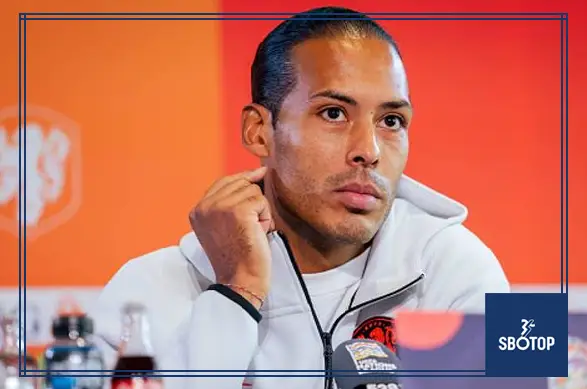
Virgil van Dijk has strongly rejected claims that he influenced or forced Ronald Koeman to alter the Netherlands’ tactical approach during their disappointing 2026 World Cup campaign.
The Liverpool captain faced a tense exchange with a Dutch journalist during a press conference ahead of the Netherlands’ Nations League meeting with Germany. The discussion centred on allegations that Van Dijk had effectively influenced Koeman’s decision to use a back-five formation against Morocco.
Van Dijk dismissed the suggestion as completely unfounded, insisting that tactical decisions were made by the coaching staff rather than by individual players. He also argued that the Netherlands’ World Cup disappointment should be viewed as a collective failure rather than something that could be attributed to one player.
The confrontation highlighted the lingering frustration surrounding the Netherlands’ World Cup exit and demonstrated that the debate over Koeman’s tactics had not disappeared despite the arrival of new head coach Xavi.
For Van Dijk, however, the issue appeared particularly personal because the claims directly questioned his role as captain and his relationship with the coaching staff.
The Back-Five Decision Became a Major Talking Point
The tactical controversy originated from the Netherlands‘ knockout-stage meeting with Morocco.
During the group stage, Koeman had generally used a back-four structure. However, he changed the defensive setup for the knockout match against Morocco, introducing a five-man defensive formation.
The Netherlands eventually lost the contest on penalties after the match finished 1-1.
The tactical change subsequently became a subject of criticism in sections of the Dutch media. According to reports, one narrative suggested that Van Dijk had played a role in persuading Koeman to change the formation, supposedly because the system provided additional protection around the experienced centre-back. Van Dijk strongly denied that account.
The Liverpool defender argued that tactical plans were the responsibility of the coaching staff.
His position was clear: players execute the plan, while the coaching staff develops it.
That distinction became central to his response during the press conference.
Van Dijk Calls the Allegations Baseless
Van Dijk did not attempt to avoid the question.
Instead, he directly challenged the reporter and rejected the suggestion that he had requested the tactical switch.
He described the claim that it had been his idea to play with five defenders as “utter nonsense” and insisted that the team had collectively failed to produce the desired performance at the World Cup.
His response reflected his frustration with what he considered an inaccurate portrayal of his influence within the squad.
Van Dijk also rejected suggestions that he and Koeman had somehow damaged Dutch football.
The captain stressed that football is a collective sport and that responsibility for results belongs to the team as a whole.
That argument is particularly relevant given Van Dijk’s position within the Netherlands squad. As captain, he carries significant responsibility on the pitch, but he does not formally control the team’s tactical decisions.
His comments therefore attempted to separate leadership responsibilities from coaching responsibilities.
The Netherlands’ World Cup Exit Still Casts a Shadow
The controversy cannot be separated from the Netherlands’ early World Cup elimination.
The Dutch side reached the knockout phase but were eliminated by Morocco after a 1-1 draw and subsequent penalty shootout.
That outcome created disappointment around the national team and increased scrutiny of the decisions made during the tournament.
Koeman’s tactical choice against Morocco became one of the topics examined after the elimination.
Koeman himself had defended the decision, explaining that defensive issues from the group stage influenced his thinking. He pointed to the number of chances conceded previously and argued that adding Nathan Ake as an additional centre-back was necessary.
That provides important context to the controversy.
While some criticism focused on the formation, Koeman’s own explanation indicated that the tactical adjustment was a coaching decision based on his assessment of the team’s defensive performances.
Van Dijk’s comments therefore align with the distinction he made during the press conference: the formation was developed by the coaching staff rather than dictated by the captain.
Koeman’s Tactical Reasoning Had Its Own Explanation
The debate surrounding the back five becomes more complicated when Koeman’s explanation is considered.
Following the Morocco match, Koeman defended his tactical approach and argued that the Netherlands had remained competitive despite not producing an especially strong attacking performance.
The Netherlands had taken the lead through Cody Gakpo, but Morocco equalised late in normal time before eventually winning the shootout.
Koeman’s explanation focused on defensive concerns and the need to give the team greater security.
That does not settle the wider debate over whether the formation was effective. Tactical effectiveness is naturally open to analysis, particularly after a result that ends a tournament campaign.
However, the available comments from Koeman and Van Dijk provide a different picture from the claim that the captain simply instructed the coach to change the system.
Van Dijk’s position was that the plan belonged to the coaching staff.
A Difficult Press Conference for the Liverpool Captain
The atmosphere during the press conference became noticeably tense as the discussion continued.
Van Dijk explained that he was comfortable with the media in general but felt compelled to respond when he believed inaccurate information was being circulated.
He argued that journalists were entitled to question the team’s performance, but he objected to what he regarded as unsupported claims about his role in tactical decisions.
The exchange illustrated the complicated relationship between elite athletes and the media.
Captains often become the public face of a national team. When a tournament ends unsuccessfully, they can receive significant attention because of their leadership position.
Van Dijk has experienced that responsibility for years with the Netherlands.
In this case, however, he appeared unwilling to accept personal responsibility for decisions that he said were outside his authority.
Van Dijk Accepts That the Netherlands Fell Short
Despite rejecting the personal accusations, Van Dijk did not attempt to portray the World Cup campaign as successful.
On the contrary, he acknowledged that the Netherlands had not played a good tournament.
That distinction was important.
He was not denying that the team had failed to meet expectations. Instead, he was disputing the idea that the failure could be linked to him controlling tactical decisions.
His argument was essentially that criticism should focus on the collective performance rather than create an individual explanation that he believes does not reflect what happened inside the team.
This position also allowed Van Dijk to accept his responsibilities as a player while rejecting responsibility for the coaching staff’s tactical choices.
For a national-team captain, maintaining that distinction can be important when addressing supporters and the media.
The Relationship Between Captain and Coach
The controversy also raises a broader question about the relationship between a captain and a national-team coach.
Captains naturally have influence inside a dressing room. Their experience can help coaches understand how players are responding to a tactical plan, and their communication can affect how instructions are implemented on the pitch.
However, influence is not necessarily the same thing as control.
Van Dijk’s comments emphasised that distinction.
The 35-year-old defender has considerable experience and has captained the Netherlands through major tournaments. It is therefore unsurprising that he may communicate with coaches about aspects of the game.
But he strongly denied crossing the line into determining the team’s formation.
His comments suggest that he wants the public conversation to recognise the difference between being a senior player and being responsible for tactical decisions.
His International Future Was Also Uncertain
The aftermath of the World Cup was significant for Van Dijk personally.
Reports indicated that he had considered stepping away from international football following the disappointing tournament.
At 35, the defender is at a stage of his career where international commitments require careful consideration alongside club football.
Van Dijk said that after taking time away with his family, he held an important meeting with new Netherlands coach Xavi.
According to Van Dijk, the conversation quickly convinced him that continuing with the national team was the right decision for him.
He highlighted trust and appreciation as important factors in that decision.
That development gives the current controversy another layer.
Rather than walking away after a difficult tournament, Van Dijk has chosen to remain involved and lead the Netherlands into a new period.
Xavi Provides a Fresh Start
The appointment of Xavi represents a significant change for the Netherlands.
Koeman left his position following the World Cup exit, while Xavi inherited a squad containing several experienced players as well as emerging talent.
For Van Dijk, the change provides an opportunity to move beyond the arguments surrounding the previous coaching regime.
The new coach’s confidence in him was reportedly important to the defender’s decision to continue his international career.
That relationship could prove central to the Netherlands’ next phase.
Van Dijk remains an experienced figure in the dressing room, while Xavi must establish his own tactical identity.
The captain’s public rejection of the Koeman allegations may also help clarify the boundaries between the leadership group and the coaching staff as the new era develops.
The Netherlands Need to Look Forward
The dispute with the journalist comes at a time when the Netherlands are attempting to move beyond their World Cup disappointment.
Their Nations League campaign offers a new competitive environment and an opportunity to assess the team’s development under Xavi.
The opening fixture against Germany carried additional interest because it marked the beginning of a new chapter for the Dutch side.
Rather than continually revisiting the decisions made during the World Cup, the team must now focus on establishing a new identity.
For Van Dijk, that means concentrating on his role as captain and defender.
For Xavi, it means implementing his tactical philosophy.
For the rest of the squad, it means adapting to new instructions and competing for places.
The past will inevitably remain part of the conversation, but performances on the pitch will eventually become the main measure of progress.
Van Dijk’s Leadership Role Remains Significant
Regardless of the controversy, Van Dijk continues to occupy an important position within the Netherlands squad.
His experience at Liverpool and with the national team gives him knowledge of high-pressure matches and international tournaments.
That experience can be valuable to younger players.
A captain’s responsibilities extend beyond tactical discussions. Leadership involves communication, preparation, maintaining standards and helping teammates deal with difficult moments.
Van Dijk’s decision to continue with the Netherlands indicates that he still sees a role for himself within the project.
The new coaching structure will determine how that role develops.
The Germany Match Adds Another Layer to the Story
The timing of the controversy was particularly notable because the Netherlands were preparing to face Germany in the Nations League.
The fixture also represented a new beginning for both teams, with Xavi taking charge of the Netherlands and Jurgen Klopp beginning his tenure as Germany’s head coach.
The match eventually ended 1-1, with Cody Gakpo scoring a late equaliser for the Netherlands after Germany had taken the lead. Van Dijk also had a goal ruled out by VAR earlier in the game.
The result provided the Dutch side with a point in Xavi’s first match.
More importantly, it gave the team an opportunity to shift attention toward the future rather than remain consumed by the arguments surrounding the World Cup.
Also Read: