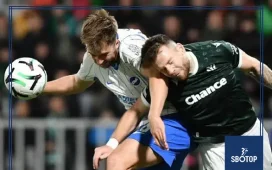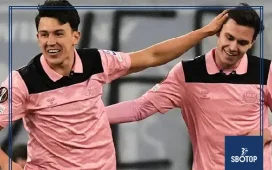



Como delivered a memorable Champions League performance on 21 October 2026, dismantling Manchester United 4-1 at the Stadio Giuseppe Sinigaglia. Nico Paz scored twice and provided an assist as Cesc Fàbregas’s team turned an early advantage into a comprehensive victory.
Tasos Douvikas and Jacobo Ramón also scored for the hosts before Joshua Zirkzee supplied a stoppage-time consolation. For United, the defeat extended their winless sequence to seven matches across all competitions and intensified scrutiny of Michael Carrick’s struggling side.
The score reflected more than superior finishing. Como repeatedly found ways through United’s defensive organisation, combining confident possession with purposeful movement. Their opponents remained within touching distance at half-time, but a damaging second-half spell removed any realistic prospect of recovery.
Paz Establishes the Tone Almost Immediately
The opening goal arrived in the second minute, giving Como an advantage before United had established themselves. Paz found room to deliver a curling left-footed finish beyond Senne Lammens.
It was an exceptional start for the hosts and an immediate complication for the visitors. United had travelled seeking a result that could interrupt their poor run, yet they were almost instantly required to chase the game.
Early goals do not necessarily determine an entire contest, but they change its demands. Como could continue playing with the reassurance of a lead, while United needed to balance their search for an equaliser against the danger of conceding again.
The finish also introduced the evening’s outstanding individual. Paz would influence the match as a scorer, creator and ball-winner, giving United several different problems to solve.
His first intervention demonstrated how little time a gifted attacker needs when allowed space near goal.
Como’s Structure Gives Their Talent Room
Although Paz supplied the most eye-catching contributions, Como’s success depended on the organisation around him.
Their movement offered passing options through the middle and into wider areas. United struggled to apply enough pressure to disrupt those connections, allowing the hosts to develop attacks with confidence.
Bruno Fernandes acknowledged afterwards that Como had been comfortable in possession and that United had not made them feel sufficient pressure. His assessment also identified the difficulties caused by their opponents’ midfield positioning.
That supports a tactical explanation for the result without requiring speculation about private dressing-room discussions. Como found usable space, and United failed to close it consistently.
The distinction matters because pressure involves more than running towards the ball. Teammates must move together, protect nearby passing lanes and anticipate the next action. When those elements become disconnected, opponents can escape one challenge and immediately find another available receiver.
A Narrow Half-Time Deficit Offers False Hope
Despite Como’s early breakthrough, the score remained 1-0 at the interval. United therefore retained a route back into the contest.
That narrow margin was significant. A single successful attacking sequence could still have brought the visitors level, regardless of how uncomfortable parts of the first half had been.
However, the scoreboard alone did not establish that United had solved the problems facing them. Remaining one goal behind and gaining control are different achievements.
For Carrick, the interval offered an opportunity to adjust personnel and improve the team’s response. For Fàbregas, the task was to ensure that Como continued creating meaningful attacks rather than becoming cautious simply because they were ahead.
The opening stages after the restart would provide the clearest evidence of which side had made the more effective transition from discussion to execution.
Como supplied the answer quickly.
Douvikas Turns an Opening into a Clear Advantage
Douvikas doubled the lead in the 49th minute, finishing a move that demonstrated Como’s ability to combine before accelerating towards goal.
Lucas Da Cunha, Martin Baturina and Paz were involved in the construction, with Paz supplying the pass that released the striker. Douvikas completed the action to make it 2-0.
The goal was damaging partly because of its timing. United had barely resumed the match before their deficit increased, undermining any immediate attempt to build momentum after half-time.
It also showed another dimension of Paz’s influence. Having scored the opener, he now recognised a teammate’s movement and delivered the pass needed to exploit it.
For United, defending the player in possession was only one part of the challenge. They also needed to track the runner threatening the space beyond them.
Como coordinated those actions more effectively than the visitors defended them, turning a promising move into a substantial advantage.
Paz Combines Pressure with Precision
Eight minutes later, Paz scored again. This time, his contribution began with winning the ball from Carlos Baleba before advancing and finishing.
The sequence demonstrated that his performance extended beyond receiving possession in favourable positions. He helped create the opportunity through defensive work, then supplied the technical quality to complete it.
Winning possession high up the pitch can leave an opponent particularly exposed. Players preparing to support an attack must reverse direction, while defenders have less time to organise themselves.
Paz exploited that moment decisively. His second goal made the score 3-0 and transformed United’s assignment from difficult to increasingly remote.
The tournament’s technical assessment highlighted both his individual quality and the team structure that supported it. That combination offers a more complete explanation than treating the evening as a collection of isolated moments.
Como’s organisation created opportunities for their leading talent; Paz converted those opportunities into decisive actions.
Ramón Completes Como’s Scoring
Como added their fourth goal in the 76th minute when Ramón headed in Kaiki’s delivery.
The identity of the scorer reinforced the breadth of the home threat. United were already struggling to contain Como’s attacking players, and a defender now arrived to complete another successful move.
At 4-0, the outcome was effectively settled. The remaining question concerned the final margin rather than which team would collect the points.
For Como, the fourth goal provided further evidence that they could sustain their attacking approach after establishing a comfortable lead. Their performance did not depend solely on the opening burst or one successful period after the interval.
For United, it exposed another failure to prevent an opponent from reaching a dangerous finishing position.
The goal also ensured that Paz’s outstanding display remained part of a broader team achievement. Como had several contributors capable of turning possession into tangible reward.
Zirkzee’s Late Goal Changes Little
United eventually scored through Zirkzee in the first minute of stoppage time. The substitute controlled Amad’s delivery and finished past Jean Butez to reduce the deficit.
The goal prevented a scoreless evening for the visitors, but its timing left no realistic possibility of a comeback. Como’s superiority had already produced a decisive margin.
There was still individual value in completing the action. Players introduced during a difficult match must continue seeking opportunities, even when the overall result appears beyond repair.
Nevertheless, the consolation could not disguise the wider pattern. United had spent too much of the evening reacting to Como’s movement and too little imposing sustained pressure of their own.
The statistical picture supported the difference in attacking effectiveness. Como placed eight of their 11 attempts on target, while United’s 12 shots did not translate into comparable reward.
Carrick Faces Problems Beyond Selection
Carrick had made four changes from the side that drew 1-1 at Leeds United, including the return of Matthijs de Ligt after a prolonged absence.
Such circumstances provide context, particularly when a player is rebuilding match sharpness. They do not, however, explain every collective difficulty demonstrated over an entire game.
United’s problems involved the relationship between their lines, the pressure applied to possession and the tracking of opponents. Those responsibilities are shared across the team.
Carrick’s post-match assessment focused on shortcomings in intensity, intention and purpose. Those were his stated concerns; claims about players deliberately withdrawing support would require separate evidence.
The defeat inevitably increased discussion about his position, but speculation about a managerial change should remain distinct from a confirmed decision. The immediate certainty was that United’s performance had fallen well below the level needed to compete with Como.
A European Statement with Work Still Ahead
The victory lifted Como to six points from three league phase matches. They had also beaten Leipzig 4-1 at home, either side of an away defeat against Feyenoord.
Those results established a strong early home record without guaranteeing qualification or predicting how far their campaign would go. The league phase still contained further challenges.
For United, three points from their opening three fixtures left considerable work ahead. Their European position remained recoverable, but improving it required more convincing performances than they produced in Italy.
Como’s achievement deserved recognition on its own terms. They attacked with clarity, pressed effectively and gave Paz the platform to deliver an outstanding individual display.
United’s reputation could not protect them from those qualities. By the final whistle, the difference had been expressed in four home goals and a result that belonged firmly to Fàbregas’s team.
Also Read: