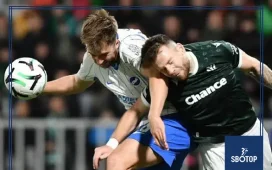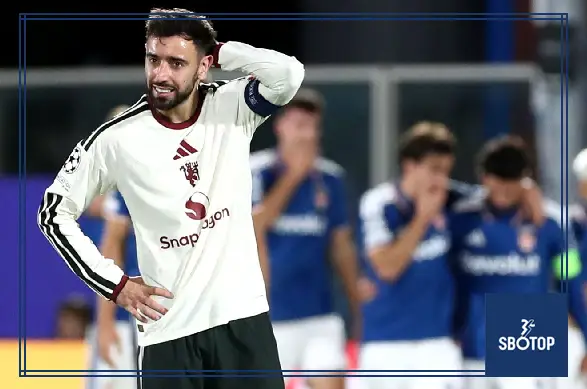
Manchester United’s 4-1 Champions League defeat at Como produced more than another damaging result. It exposed contrasting explanations from captain Bruno Fernandes and head coach Michael Carrick about why the team had performed so poorly.
Fernandes questioned the approach United adopted without the ball, explaining that the coaching staff had instructed the players against consistently pressing man-to-man. Carrick, meanwhile, challenged the intensity, motivation and application his team brought to the contest, while accepting responsibility for the overall performance.
Their comments revealed a disagreement in emphasis rather than conclusive evidence of an irreparable relationship. Nevertheless, coming after a seventh consecutive match without victory, the public exchange increased scrutiny of United’s preparation, execution and leadership. The immediate problem was clear: neither their tactical organisation nor their response to adversity had been sufficient.
A Defeat That Demanded an Explanation
Como established the direction of the match almost immediately. Nico Paz scored in the second minute, then helped turn a narrow half-time advantage into a comprehensive victory after the interval.
Tasos Douvikas doubled the lead before Paz scored again. Jacobo Ramón added the fourth, with Joshua Zirkzee supplying only a late consolation for United.
Carrick had changed his starting side following the previous weekend’s draw at Leeds United. Matthijs de Ligt returned after a lengthy absence, while injuries, illness and suspension restricted other options.
Those circumstances provided relevant context, but the scale of the defeat required a broader explanation. United remained only one goal behind at half-time, yet conceded three more after the restart. The match therefore raised questions about both the original plan and the team’s capacity to improve when given an opportunity to reset.
Fernandes Questions the Defensive Approach
Fernandes’s central concern involved United’s willingness to put Como under pressure. He explained that the decision to avoid a consistent man-to-man press came from the coaching staff.
His argument was that allowing opponents too much possession encouraged confidence and forced United into prolonged periods of chasing. That, in his assessment, made it harder to use the ball effectively when possession was eventually recovered.
The captain also suggested United needed greater bravery in applying pressure higher up the pitch. This was a specific tactical criticism, rather than a general complaint that the team should simply have played better.
However, his comments did not amount to a detailed alternative match plan. They identified what he believed had gone wrong without establishing exactly how a different approach would have worked across the entire game.
That distinction matters. Questioning a strategy is evidence of dissatisfaction; proving another strategy would have succeeded requires considerably more analysis.
The Captain Also Identifies a Mental Problem
Fernandes did not restrict his assessment to coaching decisions. He also described United’s response to conceding early as a significant weakness.
His concern was that falling behind had immediately affected the team’s outlook. Instead of responding with confidence and initiative, United struggled to escape a sense that another defeat was developing.
That observation complicated any simple division between a captain blaming coaches and a coach blaming players. Fernandes was also describing a collective failure to recover emotionally and competitively.
A team can concede through one mistake without allowing that moment to define the remaining match. United’s difficulty, according to their captain’s explanation, was that the setback influenced what followed.
His proposed response involved greater bravery, more purposeful possession and a willingness to make something happen. Those demands concerned player behaviour as well as the tactical instructions they received.
Carrick Challenges Application and Intensity
Carrick’s reaction focused on standards he believed should exist regardless of formation or defensive approach.
He questioned the motivation, aggression, discipline and willingness to work that United had demonstrated. He also apologised to supporters who had travelled to Italy to watch the performance.
Crucially, Carrick accepted responsibility for the team and its overall display. Presenting his reaction solely as an attempt to transfer blame to the squad would omit an important part of what he said.
His position was that the performance had failed at several levels simultaneously. Coaching decisions required examination, but so did the players’ execution and competitive response.
That interpretation did not resolve Fernandes’s tactical criticism. It did establish that Carrick considered the problem wider than whether United had pressed high or defended deeper.
For the head coach, a chosen system could not compensate for insufficient application within it.
Why Pressing Became the Central Dispute
The disagreement became especially visible when Fernandes’s comments were put to Carrick after the match.
Carrick responded that United had attempted a partial man-to-man press during the second half and had conceded from that situation. He emphasised the need to recover defensively whatever tactical approach was being used.
The exchange highlighted a familiar football problem: pressing succeeds through coordination, rather than individual enthusiasm alone.
If one player moves forward while teammates remain behind, an opponent may find space between the lines. If several players advance without protecting the area behind them, a single pass can expose the defence.
Equally, a team defending deeper still needs pressure at appropriate moments. Allowing opponents unrestricted time can make even a compact shape vulnerable.
These are general tactical principles, not proof that either Fernandes or Carrick had supplied the complete explanation. Their comments pointed towards different parts of the same collective problem.
Public Criticism Carries Additional Weight
Fernandes’s status as captain made his intervention particularly significant. A senior player’s assessment can shape how supporters and teammates understand a defeat.
There is a legitimate football discussion about whether United’s approach allowed Como too much comfort. There is also a separate leadership question about how that discussion should be conducted publicly.
Those issues should not be collapsed into one judgment. A tactical criticism can contain substance while still creating difficulties for a coach trying to maintain a shared message.
Similarly, a manager can demand greater effort without every disappointing action proving that a player lacks commitment.
The risk after a heavy defeat is that explanations become accusations. Once that happens, attention shifts from correcting specific actions towards deciding which individual deserves the greatest share of blame.
United needed clarity about responsibilities. The public exchange instead demonstrated how differently the same performance could be interpreted.
Como Deserve Credit for Creating the Problems
Any assessment centred entirely on United’s internal difficulties would overlook the opposition’s contribution.
Como made United uncomfortable through movement, combinations and confident use of possession. Paz supplied decisive individual quality, but his influence operated within a team capable of finding him in useful positions.
That matters when assessing effort. A player repeatedly arriving late to an opponent may be reacting slowly, following unclear instructions or confronting movement that has already disrupted the defensive structure.
The visible outcome can look similar even when the causes differ. Coaches therefore need to distinguish physical application from positional confusion and the quality of the opponent’s play.
Como’s success did not depend on United’s explanations afterwards. They had already demonstrated the effectiveness of their approach on the pitch.
Recognising that achievement makes the analysis more accurate and avoids treating the result as something United produced entirely by themselves.
Disagreement Does Not Confirm a Permanent Breakdown
The interviews justified scrutiny, but they did not establish every claim subsequently attached to the situation.
Publicly questioning tactics is not the same as confirming that an entire squad has rejected its coach. Carrick’s criticism of application did not prove that players had deliberately withheld effort.
Claims about organised opposition, private ultimatums or an inevitable managerial departure would require separate evidence.
The distinction became important as the story developed. On 29 October, Carrick confirmed that Fernandes would remain captain and said their disagreement had been addressed through discussions.
Fernandes had been an unused substitute in the intervening defeat against Bournemouth. Carrick described that selection decision as one made for the match, while maintaining that the midfielder remained committed to the club. Those were his public explanations; they should not be replaced with an assumed disciplinary motive.
Carrick Later Adds Nuance to the Debate
In subsequent comments, Carrick also resisted the suggestion that running statistics or pressing alone could explain United’s difficulties.
He argued that teams can win through different approaches and that pressing must be considered in relation to purpose, space and the qualities available.
That clarification was relevant because the original exchange risked becoming an overly simple argument between tactics and effort.
In practice, the two interact. Clear instructions can help players act decisively, while disciplined execution gives a tactical plan its best chance of working.
Neither automatically excuses the other. A poorly organised team may waste considerable energy, and a well-designed approach can still fail if players do not carry out essential responsibilities.
Carrick’s broader point was that United needed to perform better across several areas, rather than treating one defensive method as a universal solution.
United Need a Shared Response on the Pitch
The lasting significance of the Como defeat lay in what it revealed about United’s ability to respond together.
Fernandes wanted greater pressure and bravery. Carrick demanded intensity, discipline and responsibility. Those objectives were not inherently incompatible, even if the public delivery suggested tension.
The practical task was to translate them into recognisable actions: when to engage opponents, who supports the first challenge, how the defence protects space and what happens immediately after possession changes.
Improvement would also require a stronger response to conceding. One early setback cannot repeatedly become the emotional starting point for an entire defeat.
The interviews exposed the disagreement, but further interviews could not solve it. United’s answer needed to emerge through clearer collective decisions, sustained application and performances in which the captain’s expectations and the coach’s instructions supported the same outcome.
Also Read: