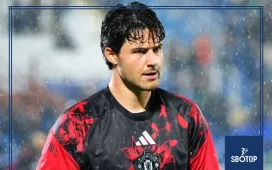
Dundee United had to take the lead three times before finally overcoming Aberdeen 3-2 in a compelling Scottish Premiership contest at Tannadice on 24 October 2026. Zidane Iqbal scored his first goal for the club, Dylan Tait restored the hosts’ advantage, and Zac Sapsford supplied the decisive finish after Aberdeen twice fought back.
Nesta Guinness-Walker and Connor Ronan scored for the visitors, whose attacking spells ensured United could never treat the afternoon as comfortable. Heavy rain added difficulty without preventing an open contest. By the final whistle, United had protected the third advantage that mattered most, extending their unbeaten run and moving into fourth place at the conclusion of the match.
An Open Contest Takes Shape Immediately
Aberdeen threatened inside the opening minute, with Michael Forbes blocking Ronan’s effort behind for a corner. The intervention established an early pattern: both sides were prepared to attack, and defenders would need to make important decisions throughout the afternoon.
United also sought openings, with Lyall Cameron helping move play forward and Kevin Ciubotaru providing width. Neither team could assume that possession in midfield would guarantee protection from the next attack.
The weather complicated control and passing, but it did not turn the match into a sequence of aimless clearances. There were purposeful moves alongside the scrappier moments. That combination created a demanding game in which concentration mattered as much as attacking ambition. The first breakthrough eventually came through a shot that acquired an unpredictable final path.
Iqbal Opens His Dundee United Account
Iqbal gave United the lead in the 14th minute with a powerful effort from approximately twenty-five yards. The ball took deflections before beating Marius Muller, providing the midfielder with his first goal in Dundee United colours.
The deflections were part of the explanation and should not be omitted when describing the finish. Equally, Iqbal’s decision to shoot created the situation. He recognised an opportunity to threaten from outside the penalty area rather than allowing the move to fade.
For United, the goal supplied an advantage despite Aberdeen’s positive opening. For Iqbal, it represented a personal milestone within a competitive team performance. Its importance was immediate, but it did not settle the contest. Aberdeen retained enough attacking purpose to challenge the lead and eventually force another change in the score.
Guinness-Walker Brings Aberdeen Level
Guinness-Walker equalised in the 25th minute, recording his first goal for Aberdeen. His close-range finish rewarded the visitors’ willingness to keep searching after falling behind.
The goal reinforced how little separation there was between the teams. United had found the opener, but Aberdeen were still reaching useful positions and creating situations that required defensive intervention.
From an analytical perspective, the equaliser demonstrated why an early lead must be supported by continued organisation. Scoring changes the scoreline, but it does not remove the opponent’s ability to exploit space or react to loose balls. United now needed another response, while Aberdeen had an opportunity to build from restored parity. That opportunity lasted only briefly, because the hosts produced an immediate answer before the visitors could settle into the changed circumstances.
Tait Restores the Advantage Almost Immediately
Dylan Tait put United back in front in the 27th minute, finishing at the far post following a corner. Only two minutes separated Aberdeen’s equaliser from the home side’s second goal.
The timing gave the strike particular value. United did not spend an extended period trying to recover their direction after conceding. They returned to a productive attacking situation and converted it.
The goal also illustrated a different route from Iqbal’s opener. United had threatened from distance and then profited from a delivery into the penalty area, requiring Aberdeen to defend several kinds of danger. Tait’s finish ensured the hosts reached half-time ahead, but the narrow margin preserved the visitors’ route back. The first half had already shown that neither team could rely on an advantage remaining undisturbed.
Aberdeen’s Second-Half Pressure Produces Another Reply
Aberdeen began the second half with renewed purpose and created pressure around United’s penalty area. The hosts had to defend actively rather than simply assume their interval lead would allow them to dictate the restart.
Ronan eventually supplied the equaliser early in the second half, striking from distance after combining with Lewis Smith. His finish brought the score to 2-2 and forced United to begin the search for an advantage again.
The goal was a reminder that strong attacking periods require an end product. Aberdeen had converted theirs into something concrete rather than allowing a promising spell to pass without changing the match. United, meanwhile, faced a familiar problem: they could score, but they had not yet found a way to protect a lead through the next phase of the contest.
The Woodwork and a Disallowed Goal Preserve the Balance
Aberdeen continued to threaten after drawing level, with Brad Lyons sending a delivery against the crossbar. United remained under pressure, although the match still offered opportunities in both directions.
Sapsford then appeared to restore the hosts’ lead after meeting Jesse Randall’s low delivery. However, the finish was disallowed following a video review because Daniel Bennie was offside and interfering with the goalkeeper’s view.
That decision preserved the score at 2-2. It also required United to respond to another interruption in their pursuit of victory. The disallowed goal was not part of their eventual scoring total, but the move showed that a route towards Aberdeen’s goal remained available. Sapsford would soon receive another opportunity, this time producing a finish that stood.
Sapsford Finally Supplies the Winning Touch
Sapsford scored in the 72nd minute, directing Tait’s cross across Muller and into the net with a well-executed header. United led for the third time, and this advantage would survive until full-time.
The striker had returned to the starting line-up in place of Idjessi Metsoko. His contribution therefore gave the selection change a clear reward, although it would be speculative to claim that no alternative combination could have produced a positive result.
What mattered was the execution on the pitch. Tait delivered the ball into a useful area, and Sapsford supplied the movement and contact needed to convert it. Having already experienced the frustration of a disallowed finish, he remained ready to influence the match. His next decisive action became the difference between the teams.
Tait’s Contribution Connects the Attacking Story
Tait’s afternoon extended beyond scoring United’s second goal. His delivery for Sapsford’s winner placed him at the centre of another decisive move, connecting his own finishing contribution with the creation of the final breakthrough.
That range of involvement is valuable because attacking responsibility cannot rest with one player alone. A forward needs service, while a midfielder’s influence may emerge through either supplying a chance or arriving to finish one.
In this match, United received both from Tait. However, the significance should remain specific to the evidence: he contributed directly to important scoring moments at Tannadice. Broader claims about permanent changes in his role or future productivity would require more than one performance. Here, his effectiveness helped United keep finding answers when Aberdeen repeatedly removed their advantage.
United Must Complete the Job Without a Fourth Goal
United created further chances after going ahead. Substitute Lachlan Rose had opportunities to add another, including a stoppage-time header that was blocked near the line. The additional goal that would have made the finish more comfortable did not arrive.
Aberdeen therefore remained within one successful attack of rescuing a point. United’s task shifted towards handling deliveries, winning important contacts and avoiding unnecessary openings as the visitors committed forward.
The hosts succeeded, but the absence of a fourth goal mattered. It meant defensive actions retained their full significance through the closing stages. United could not rely on a larger margin to absorb another concession. Having lost two earlier leads, they finally preserved the one that decided the result, completing the most important improvement within the match itself.
Aberdeen’s Fightback Deserves Recognition
Aberdeen’s defeat should not erase their contribution to an entertaining contest. They equalised twice, generated sustained attacking spells and continued looking for another response after Sapsford’s goal.
Their squad had also faced injury and illness problems before the fixture. Those circumstances provided context for selection changes, but they did not establish that the result was inevitable or explain every defensive issue.
A balanced assessment recognises both resilience and shortcomings. Aberdeen demonstrated enough attacking quality to recover from two setbacks, yet conceded a third goal they could not cancel out. United’s winning finish was not made less valuable by the visitors’ resistance. Instead, that resistance explains why the home side needed three separate scoring contributions and a disciplined finish to secure the points.
A Valuable Win with Clear Lessons Attached
For United, the immediate rewards were three points, an extended unbeaten run and fourth place after the match. Iqbal had his first club goal, Tait influenced two decisive finishes, and Sapsford supplied the winner.
The performance also left work to review. Twice conceding an equaliser showed that attacking effectiveness had not always been matched by control. Preserving the final lead was encouraging, but it did not remove the value of examining the earlier defensive passages.
Tannadice delivered a victory built through repeated responses rather than uninterrupted dominance. United absorbed disappointment, found another attacking solution and finally protected their advantage. That combination settled a match in which Aberdeen kept asking questions, and ensured Iqbal’s breakthrough became part of a winning afternoon.
Also Read: