

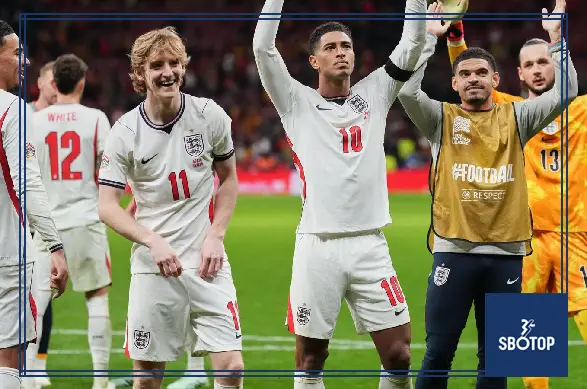
England will face Norway in the quarter-finals of the 2026–27 UEFA Nations League, eight months after the teams needed extra time to settle a World Cup tie at the same stage. Thomas Tuchel’s side will travel to Oslo for the first leg on Saturday 27 March 2027 before hosting the return at Wembley on Tuesday 30 March. If England advance, they will play either Germany or Belgium in a single-leg semi-final on 10 June. A meeting with Germany depends on both teams winning their March ties.
The draw, held in Nyon on 20 November, gives England a familiar opponent and a different kind of knockout test. England won 2–1 after extra time in Miami in July. This time, Norway get the first match on home soil, and whatever happens in Oslo will shape the decisions both coaches make three days later. England earned the right to play the return at Wembley by winning their League A group. Norway qualified as runners-up after a late penalty on the final night of their campaign.
What England Earned by Winning Their Group
England’s first Nations League match ended in a 3–2 home defeat to Spain. They responded with five consecutive wins, including a 7–0 victory away to Croatia and wins home and away against Czechia. In November, England beat Croatia 2–1 before winning 3–2 away to Spain, reversing the score from the opening fixture and securing first place in Group A3. That final victory also ended Spain’s 43-match unbeaten run.
Harry Kane scored eight goals in the league phase, more than any other player. He also overtook Peter Shilton as England’s most-capped men’s international when he played against Croatia in November. Jude Bellingham led the league phase with six assists. Those figures give Norway two related problems to consider. Kane can occupy centre-backs in the penalty area or drop deeper to help build an attack, while Bellingham can exploit the space that opens when a defender follows him. How England use the pair will depend on selection and availability in March.
Wembley gives England the advantage of knowing exactly what they need when they play in front of their own supporters. The value of that advantage will depend on the first leg. A lead would give Tuchel more freedom to choose when England press and when they keep possession. A deficit could force his side to take greater risks against forwards capable of exploiting the space behind them. The away match is where England can give themselves room to make those choices.
Norway Arrived in the Last Eight the Hard Way
Ståle Solbakken’s team won their opening match against Denmark, then lost three in a row. Portugal beat them twice, and Wales won the first meeting between the sides. Norway went into the November window needing results and got them, beating Wales 3–1 before taking on Denmark in Copenhagen. They were still on course for a promotion and relegation play-off deep into stoppage time, when Erling Haaland converted a penalty to secure a 3–2 win and second place in Group A4 behind Portugal.
Norway finished with nine points from six games. Each of their three defeats was by a single goal, and they scored in every group match. Haaland supplied six goals, while Martin Ødegaard recorded five assists. The campaign exposed how easily Norway’s games could swing between attack and defence. It also showed the danger of assuming they have run out of time. In Copenhagen, they equalised late before Haaland won the match from the spot.
For Solbakken, starting at Ullevaal Stadium offers a chance to put England under pressure before the return at Wembley. He acknowledged England as favourites after the draw and pointed to what Norway could do at home if they played at their best. A narrow first-leg lead would give him a choice in London. Norway could defend deeper and look for quick breaks, or continue to press England when the opportunity arises. The prospect of Haaland running into space makes either approach credible if he is available.
What the Miami Meeting Can Tell Tuchel
England’s World Cup win in Miami gives Tuchel a recent competitive match to study. Norway took England beyond 90 minutes, and a single goal ultimately separated the teams. Tuchel acknowledged after the draw that the encounter had given England a sense of the challenge Norway present. He also pointed to the relative rarity of a two-legged tie in international football, where his players are more accustomed to group matches and knockout games settled on the day.
One question for England is where to apply pressure. If Ødegaard receives the ball facing forward, he can look for Haaland’s run before the centre-backs have time to adjust. England’s midfield can reduce that threat by closing down the pass into Ødegaard or making him receive with his back to goal. On the other hand, pressing too aggressively can open a direct route past midfield. Alexander Sørloth gives Norway another forward who can occupy defenders and help the team move up the pitch.
England can pose a similar problem when their own forwards move away from the last line. Kane dropping into midfield can create an extra passing option, but the move is most dangerous when someone runs into the space he has left. Bellingham is one player who could make that run. Keeping enough cover behind the ball at the same time could matter as much as creating the chance, especially if England are chasing a goal in Oslo and Norway are set up to break.
How the Two Legs Change the Decisions
The first leg takes place at Ullevaal on 27 March, with the return at Wembley on 30 March. The team with more goals across the two matches advances. If the teams are level on aggregate after normal time in London, they play 30 minutes of extra time. A penalty shoot-out follows if the scores remain level. An away goal counts the same as a home goal.
That format can change how both sides approach the final minutes in Oslo. If England trail by a goal, pursuing an equaliser could improve their position or expose them to a second setback. Norway would face their own calculation if ahead. A second goal could alter the shape of the return, while committing too many players forward could surrender the lead they have worked to build. Both coaches will have to weigh what a substitution can do immediately against what it might leave them to manage at Wembley.
The three-day turnaround also gives the benches a role across the tie. A player asked to press hard and cover ground for most of the first match may have a different assignment in the second. The aggregate score could make a fresh midfielder more valuable than another striker, or give a direct runner an opportunity against defenders who have already handled a full match. Those choices will become clearer in March, once the coaches know who is fit and how the first leg unfolds.
Germany’s Route Goes Through Belgium
Germany visit Belgium in the first leg on 25 March and host the return on 28 March. Jürgen Klopp’s team won Group A2 after finishing strongly in November, beating Serbia 3–1 and the Netherlands 5–0. Florian Wirtz scored twice against the Dutch and finished the league phase with four goals. Germany’s results make them a credible semi-final prospect, but Belgium also finished their group campaign with a statement win.
Mark van Bommel’s Belgium finished second in Group A1 behind France. They came from behind to beat Italy 4–1 in their final group game, with Kevin De Bruyne finishing the league phase as their leading scorer on three goals. Because the Belgium–Germany tie concludes two days before the return at Wembley, England and Norway will know their possible June opponent by the time they play their second leg.
The Rest of the Draw Sets Up a Demanding June
On the other side of the bracket, Spain face France and the Netherlands play defending champions Portugal. The winners of those ties meet on 9 June, a day before the semi-final involving England or Norway if either advances. The final and third-place match are scheduled for 13 June. England’s best finish in the competition remains third place in the inaugural 2018–19 edition. Winning the quarter-final would give Tuchel’s team a chance to improve on that record.
England’s win in Miami offers a reference point, and their victory in Spain showed they could win away when first place was at stake. Norway’s late qualification in Copenhagen showed what Solbakken’s team can do when the margin for error disappears. The draw has put those sides together again, with the opening match in Oslo and the decisive one in London. Whether England spend June preparing for Germany or Belgium will come down to how well they handle both.
Also Read: