

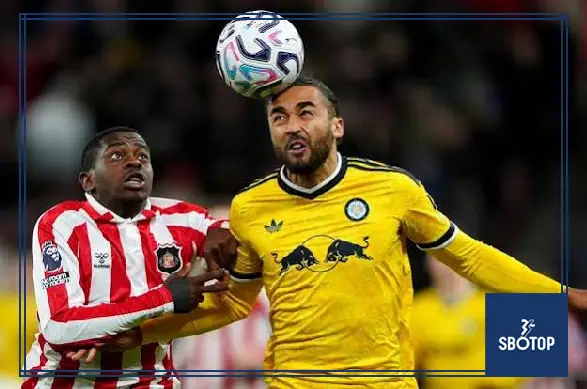
Sunderland ended a run of four consecutive Premier League defeats but remained bottom of the table after drawing 0-0 with Leeds United at the Stadium of Light on Sunday, 25 October 2026. Neither side found the decisive finish in a match shaped by difficult weather, committed defending and important goalkeeping interventions.
For Regis Le Bris, the point represented a modest improvement rather than a complete recovery. Sunderland avoided another loss, yet their wait for a league victory stretched to six matches.
Leeds departed with a clean sheet and enough opportunities to wonder whether a late winner had been within reach. The point moved Daniel Farke’s team into seventh place immediately after the fixture, while Sunderland remained 20th.
The result captured the competing priorities of the afternoon. Sunderland needed to restore stability without losing the ambition required to win. Leeds had to withstand the hosts’ physical challenge while finding sufficient attacking quality of their own. Both achieved part of the task, but neither completed it.
Brobbey’s Return Gives Sunderland an Early Threat
Brian Brobbey returned to Sunderland’s starting line-up after an absence and provided the home side with their clearest first-half openings.
One attempt forced James Trafford into a save, while another opportunity saw the striker get through before the goalkeeper reacted quickly to close down the danger. Brobbey’s involvement gave Sunderland a direct presence against Leeds’ defensive line.
The significance was practical. A forward willing to challenge defenders and attack space can help teammates move possession into more threatening areas. However, the final action still determines whether that work changes the score.
Brobbey could not find the breakthrough, and Sunderland reached the interval without a goal. His return added an option, but it did not immediately resolve the team’s difficulty converting opportunities.
That distinction matters when evaluating an individual comeback. Availability can improve a manager’s choices without guaranteeing an instant transformation in results.
Trafford Ensures Leeds Reach Half-Time Level
Trafford’s first-half interventions were central to keeping Leeds in the match. Sunderland registered the only shots on target before the interval, but the visiting goalkeeper prevented those attempts from becoming an advantage.
Goalkeeping can influence the tactical shape of a contest as much as an attacking substitution. By preserving the score, Trafford allowed Leeds to enter the second half without needing to abandon their approach in pursuit of an equaliser.
For Sunderland, the frustration was that their more promising moments had not produced a reward. Pressure and forward movement can encourage a team, but they provide limited relief when the scoreboard remains unchanged.
The first half therefore offered mixed evidence. Sunderland had created enough to test their opponents, while Leeds had shown the defensive resilience to survive a less convincing attacking period.
Neither team had established a decisive grip, and the interval arrived with the outcome still open.
Strong Winds Make Execution More Difficult
Blustery conditions complicated the match, affecting the flight of the ball and making it harder for either side to develop a consistent passing rhythm.
Longer deliveries required repeated adjustments. Players receiving under pressure also had to judge how the wind might alter a ball that would ordinarily appear predictable.
The weather was an important part of the context, but it should not be treated as a universal explanation. Both sides still had opportunities to make better decisions or execute their final actions more accurately.
From an analytical perspective, difficult conditions increase the value of support around the ball. Shorter distances between teammates can provide alternatives when a longer pass becomes unreliable.
They also place greater emphasis on second balls and defensive concentration. Winning the first challenge may not end the danger if possession drops into another contested area. Sunderland and Leeds had to manage those situations throughout the afternoon.
Angulo Tests the Visitors After the Break
Nilson Angulo became an important attacking outlet for Sunderland in the second half. He tested Trafford with efforts from around the edge of the penalty area, including a curling attempt and a deflected strike.
Those shots required the goalkeeper to remain alert, particularly when a change in direction could affect his judgement. Trafford again responded well enough to preserve the clean sheet.
Angulo’s willingness to attempt a finish gave Sunderland another route towards goal. When space inside the box is restricted, an attacker capable of threatening from outside it can force defenders to adjust.
However, shots from distance do not automatically indicate sustained attacking control. Their value depends on the position, pressure and alternatives available.
Sunderland’s efforts kept Leeds occupied, but the hosts still lacked the successful final action that would have changed the demands of the game. The search for a breakthrough continued without a corresponding increase in the score.
Leeds Find More Attacking Opportunities
Leeds’ stronger attacking moments came after half-time. Tarik Muharemovic directed a header towards goal from a corner, and Ao Tanaka forced Robin Roefs into action with a low shot.
Those opportunities ensured Sunderland could not concentrate solely on finding a winner. Their own defensive responsibilities remained significant as the visitors began contributing more to the contest.
The match consequently developed a different balance. Sunderland had enjoyed the clearer first-half threat, but Leeds were increasingly capable of creating problems at the other end.
For both teams, the challenge was to attack without losing the structure required to prevent a counterattack. A goalless score does not remove risk; it can make one poorly managed transition even more important.
Neither side consistently found the precision needed to turn an opening into a goal. The contest remained competitive, although fluency and clear chances were limited.
Calvert-Lewin’s Penalty Appeal Is Rejected
Dominic Calvert-Lewin started for Leeds despite uncertainty over his fitness before the match. During the second half, he appealed for a penalty after pursuing a rebound following Tanaka’s attempt.
The incident was checked, but no penalty was awarded. Roefs was judged to have made contact with the ball, and the original decision remained unchanged.
The episode was significant because a spot-kick could have transformed an otherwise low-scoring contest. However, its importance does not justify presenting an alternative decision as something that should be assumed.
The confirmed outcome was that play continued without a penalty. Any argument about how the match might have developed after a different ruling remains hypothetical.
For Leeds, the task was to continue creating opportunities rather than allow one appeal to dominate their response. Sunderland, meanwhile, had to reset defensively after another moment that brought danger close to their goal.
Longstaff Almost Changes the Ending
Sean Longstaff entered late and came close to securing victory for Leeds. Roefs turned away one attempt, while another goal-bound effort was blocked during the closing stages.
His impact underlined how a substitute can influence a match without having much time on the pitch. Fresh movement and a willingness to shoot can pose a different problem when defenders are approaching the end of a demanding afternoon.
For Sunderland, those moments also showed the risk attached to treating a clean sheet as secure before the final whistle. A game containing few chances can still be decided by its last meaningful attack.
The hosts survived, but their point depended on late interventions as well as earlier defensive work.
Leeds had reason to regret not converting that pressure. Nevertheless, the final opportunities did not produce a goal, and the match ended with the same score it had carried throughout.
A Clean Sheet Provides Limited Relief
Sunderland’s defensive outcome offered Le Bris something useful to build on. After four successive league defeats, avoiding another loss stopped the immediate deterioration in results.
The clean sheet also mattered because improvement at one end of the pitch can provide a platform for progress at the other. Teams struggling for victories often need to reduce the consequences of individual mistakes before they can establish confidence.
Yet a draw cannot be presented as a complete answer. Sunderland remained bottom, and the six-match wait for a league win continued.
The most balanced assessment recognises both sides. They prevented Leeds from scoring and created opportunities themselves, but did not do enough to secure three points.
The result was a step towards greater stability rather than evidence that the wider problem had been solved. That would require further performances and, crucially, victories.
Leeds’ Defensive Reliability Remains an Asset
The draw reinforced Leeds’ ability to make themselves difficult to beat. They had conceded only six league goals at that stage and had lost just once during the opening eight matches.
Farke’s side demonstrated that defensive organisation could survive an uncomfortable away fixture, including periods when Sunderland carried the greater threat.
That resilience is valuable, but repeated draws bring their own questions. Preventing defeat protects a team’s position; turning close games into victories is what creates a stronger upward movement.
Leeds had opportunities to do precisely that in the closing stages, yet could not find the finish. Their clean sheet therefore represented both an achievement and part of an incomplete performance.
The broader analytical challenge was to preserve the defensive foundation while adding more consistent attacking fluency. Nothing in this match suggested those aims were incompatible, but neither did the result show that Leeds had fully connected them.
One Point Leaves Sunderland Seeking More
The afternoon’s key actions came from players trying to break a narrow contest open: Brobbey’s first-half chances, Angulo’s shooting, Tanaka’s effort and Longstaff’s late threat.
Trafford and Roefs ensured that none became a decisive goal. Their interventions helped explain why the match finished level without reducing the result to a simple lack of ambition.
For Sunderland, the immediate benefit was clear. The sequence of defeats ended, and a clean sheet restored a measure of stability. The limitation was equally clear: they remained bottom and still needed a league victory.
Leeds left with another example of their resilience and some frustration over the ending. Both teams had protected something, but neither found the finishing quality required to take everything. At the Stadium of Light, defensive survival proved more reliable than attacking execution.