

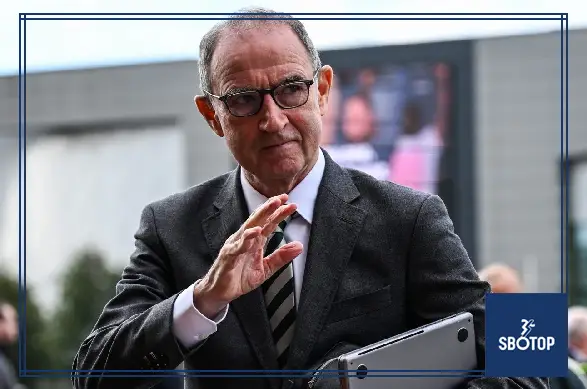
Celtic have made it clear that Martin O’Neill retains the backing of chief executive Michael Nicholson despite what has been described as a particularly painful week for the club.
The pressure surrounding Celtic has increased following a difficult sequence of events, but the club’s leadership has chosen to maintain its support for O’Neill as he works to improve performances and results.
For any manager, periods of adversity can quickly become defining moments. Expectations at Celtic are consistently high, and supporters demand success in domestic competition while also expecting the team to compete effectively on the European stage.
O’Neill therefore finds himself under significant scrutiny, but the message from Nicholson provides an indication that Celtic’s hierarchy remains committed to allowing the manager to work through the current difficulties.
Rather than making a dramatic change in the aftermath of a challenging period, the club appears focused on stability, preparation and finding solutions on the pitch.
A Difficult Period for the Scottish Giants
Celtic are accustomed to pressure.
The club’s history, support and expectations mean that even a single disappointing result can generate significant discussion. When several setbacks arrive in quick succession, the attention becomes even greater.
The recent week has been described as “painful”, reflecting the disappointment surrounding Celtic’s performances and results.
For O’Neill, the challenge is now to prevent that disappointment from becoming a prolonged problem.
Football seasons rarely develop in a completely straight line. Even successful teams encounter periods in which performances decline, confidence drops or results fail to match expectations.
The response to those moments can be just as important as the initial setbacks.
Celtic’s leadership appears to believe that O’Neill is capable of guiding the team through the current situation.
That backing gives the manager an opportunity to focus on football rather than uncertainty surrounding his position.
Michael Nicholson Provides an Important Message
Chief executive Michael Nicholson plays a central role in Celtic’s football structure, and his public support for O’Neill is therefore significant.
When a club’s chief executive backs a manager during a difficult period, it sends a message to the dressing room as well as the supporters.
Players know that their manager continues to have the confidence of the leadership team.
That can help create stability.
A dressing room affected by uncertainty can become distracted by speculation about management changes, but clear communication from the club hierarchy can reduce some of that noise.
Nicholson’s backing does not remove the expectation of improved results.
Instead, it suggests that Celtic want O’Neill to have the opportunity to address the team’s problems.
The responsibility now shifts toward the manager and his players to demonstrate progress.
O’Neill Faces the Challenge Head-On
Martin O’Neill is no stranger to the demands of Celtic.
His previous association with the club gives him an understanding of the expectations surrounding the team and the emotional connection supporters have with Celtic.
That experience can be valuable during difficult periods.
The manager knows that supporters want more than explanations. They want to see performances improve.
O’Neill’s immediate challenge is therefore to translate the backing from the boardroom into positive action on the pitch.
That means identifying where the team has struggled and determining how those weaknesses can be addressed.
Defensive organisation, midfield control, attacking efficiency and confidence can all influence results.
The manager must also consider whether changes are required in personnel or tactical approach.
The Importance of Squad Confidence
Confidence can have a major influence on football teams.
When results are positive, players tend to make decisions more naturally. Passing becomes quicker, movement improves and attacking players are more willing to take risks.
When confidence falls, the opposite can happen.
Players may become hesitant, possession can become slower and mistakes can appear more frequently.
Celtic’s current challenge is to prevent a difficult week from affecting the team’s mentality beyond the immediate fixtures.
O’Neill will need to create an environment in which players understand that setbacks do not define the entire season.
The squad must learn from the difficult moments while maintaining belief in its ability to improve.
That process begins in training.
Support From the Dressing Room Matters
While Nicholson’s backing is important, support from the players is equally significant.
A manager’s tactical ideas can only work when the squad is prepared to execute them.
Players must demonstrate commitment to the team’s structure, compete for each other and maintain discipline throughout matches.
Experienced members of the Celtic squad can play a particularly important role.
They can help younger teammates manage the pressure surrounding difficult results and remind the group of the standards expected at the club.
Leadership is not limited to the captain.
Several players can influence the mood of a dressing room.
If Celtic can create a collective response to the recent difficulties, O’Neill’s task will become considerably easier.
Why Stability Could Matter
Changing managers is one possible response to poor results, but it is not the only option.
Celtic’s decision to continue backing O’Neill indicates that the club currently sees value in stability.
A manager needs time to establish tactical principles, understand his squad and develop relationships with players.
Frequent changes can interrupt that process.
By maintaining support for O’Neill, Celtic can concentrate on improving the team’s performances without simultaneously managing another transition.
The approach also gives the club’s football department time to assess problems carefully.
Rather than reacting emotionally to one difficult week, Celtic can evaluate broader trends.
That does not mean performances should be ignored.
It means the club can attempt to distinguish between short-term setbacks and longer-term issues.
The Pressure of Celtic’s Expectations
Celtic’s expectations are different from those of many clubs.
Supporters expect their team to challenge for trophies and perform strongly in domestic competition.
European football adds another layer of pressure.
Every match can be viewed through the wider objective of maintaining Celtic’s position among the leading clubs in Scotland while continuing to improve their competitiveness internationally.
O’Neill therefore knows that there is little room for complacency.
Even with the board’s backing, the manager will be judged by what happens on the pitch.
The support from Nicholson provides time and stability, but results remain an important part of the equation.
Turning a Painful Week Into Motivation
The description of the recent period as a “painful” week can also become a source of motivation.
Teams sometimes respond strongly after experiencing disappointment.
Players can use criticism as an incentive to improve their performances, while managers can use difficult results to identify weaknesses that may have been overlooked during successful periods.
O’Neill will have the opportunity to turn the recent adversity into a learning experience.
The key is avoiding overreaction.
One poor performance does not necessarily require an entirely new tactical system.
Instead, the manager may focus on small improvements that can produce significant differences.
Better concentration, sharper finishing and improved defensive communication can change results without requiring a complete transformation.
The Need for Greater Consistency
Celtic’s next objective must be consistency.
A strong performance followed by another disappointing result would do little to ease concerns.
The team needs to produce reliable levels of performance across consecutive matches.
Consistency begins with basic principles.
Players must understand their responsibilities when Celtic have possession and when they lose it.
The team must remain compact defensively, move the ball efficiently and create enough opportunities in attack.
When those elements become repeatable, results can become more stable.
O’Neill will therefore be looking beyond a single match.
The bigger goal is creating a team that can perform effectively week after week.
Tactical Adjustments Could Be Important
Every manager responds to difficult periods differently.
O’Neill may decide that certain tactical adjustments are necessary.
Those changes could involve the team’s formation, pressing strategy, attacking movement or defensive structure.
The exact solution will depend on the strengths and weaknesses identified within the squad.
One important consideration is balance.
Celtic need to attack with ambition, but they must also ensure that their structure protects them against counterattacks.
Similarly, dominating possession is useful only when it produces meaningful opportunities.
The manager’s task is to find a tactical approach that maximises the abilities of his players.
The Role of the Supporters
Celtic supporters will also play an important role during the response.
The atmosphere around a football club can influence confidence, particularly during difficult periods.
Supporters naturally have the right to express disappointment when performances do not meet expectations.
At the same time, positive backing can help players regain confidence.
O’Neill will understand the emotional relationship between Celtic and their supporters.
The quickest way to restore that connection is through performances.
A committed team that fights for every ball can receive strong support even when results are not perfect.
If Celtic begin producing better football and collecting victories, the atmosphere can change quickly.
Experienced Players Must Lead
Senior players now have an opportunity to demonstrate leadership.
Difficult weeks often reveal which members of a squad can maintain concentration when circumstances become challenging.
Celtic’s experienced players must help establish standards during training and matches.
They can encourage younger teammates, demand greater concentration and ensure that tactical instructions are followed.
Leadership is particularly important when a team concedes a goal or faces a period of pressure.
Instead of allowing frustration to spread, experienced players can help the group remain organised.
O’Neill will expect those leaders to become an extension of his instructions on the pitch.
Young Players Can Provide Energy
Celtic’s younger players can also contribute to the response.
Youth can bring energy, enthusiasm and unpredictability.
A young player given an opportunity during a difficult period may provide something different to the team.
However, introducing younger players must be handled carefully.
They should not be expected to solve every problem immediately.
Experienced teammates and coaching staff need to provide the environment in which younger players can develop.
O’Neill’s challenge is to find the right balance between experience and youth.
The Importance of the Next Result
While the club is looking at the bigger picture, the next match will inevitably attract attention.
Football supporters often judge a team’s direction through immediate results.
A positive performance could ease pressure and provide confidence.
Another disappointing result would lead to further questions.
That is the reality of managing Celtic.
O’Neill cannot control outside discussion, but he can control preparation, selection and tactical instructions.
His focus must therefore remain on what happens inside the training ground.
Nicholson’s Backing Creates Responsibility
The backing from Michael Nicholson should not be interpreted as a guarantee of unlimited time.
Instead, it provides O’Neill with an opportunity to respond.
With the club leadership publicly supporting him, the manager has a clear platform from which to demonstrate that his methods can produce improved performances.
That creates responsibility.
The players also share that responsibility.
A manager cannot change results alone.
Celtic’s response must be collective, involving coaches, players and the wider football structure.
Also Read: