


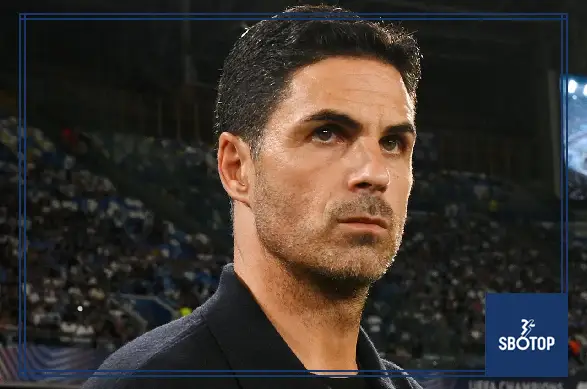
Mikel Arteta enters another important phase of his Arsenal tenure with expectations higher than ever. After transforming the club into a consistent challenger at the top end of English football, the Spanish manager now faces a different challenge: turning Arsenal’s sustained progress into major silverware.
The objective is no longer simply to establish Arsenal among the Premier League’s leading clubs. The ambition surrounding the Emirates Stadium is increasingly connected to domestic dominance and Champions League success.
Arteta has spent years building an identity based on possession, technical quality, pressing, defensive organisation and collective discipline. Arsenal have gradually moved away from the uncertainty that surrounded the club before his arrival and have developed into a side capable of competing with the strongest teams in England.
That progress has created a new level of expectation.
Arsenal supporters want their team to compete for trophies every season, while the club’s leadership expects the foundations built under Arteta to produce tangible rewards. The next stage of the project therefore carries a different pressure from the one Arteta faced when he first took charge.
The emphasis is now on converting development into achievement.
Arteta’s Arsenal Has Already Changed
When Arteta became Arsenal manager, the club needed significant structural and cultural improvement. The team lacked consistency, defensive reliability and a clearly defined playing identity.
Arteta gradually addressed those issues.
The Arsenal of today is built around a recognisable tactical philosophy. Players are expected to contribute both with and without the ball, while the team’s structure is designed to control matches rather than simply react to opponents.
One of the most important changes has been Arsenal’s defensive transformation.
The club has developed a much stronger defensive platform, with greater emphasis on positioning, concentration and collective responsibility. That stability has allowed Arsenal to control matches more effectively and provided a foundation from which their attacking players can operate.
Arteta’s greatest achievement has been creating a team that looks unmistakably like his own.
That identity has become particularly important as Arsenal compete against clubs with enormous financial resources and established winning cultures.
The challenge now is maintaining that identity while finding the additional qualities required to win the biggest competitions.
The Premier League Remains the Central Target
Winning the Premier League requires extraordinary consistency.
A team can produce spectacular performances and still finish without the title if it drops points during difficult periods. The competition demands concentration across an entire season, including during congested fixture schedules, injury problems and difficult away matches.
For Arsenal, the objective is therefore not simply to defeat direct rivals.
They must also consistently overcome teams outside the traditional title race.
That means Arteta must ensure Arsenal possess enough depth, tactical flexibility and physical resilience to maintain their standards throughout a long campaign.
Premier League dominance is built through consistency rather than occasional brilliance.
Arsenal’s development has already demonstrated that they can compete near the summit. The next step involves becoming increasingly ruthless when opportunities appear.
In previous title races, small margins have separated Arsenal from the ultimate prize. Those margins can come from late goals, defensive concentration, squad rotation, set pieces or the ability to win matches when performances are below their best.
Arteta will therefore need his players to develop an even stronger competitive mentality.
A Deeper Squad for a Longer Season
One of the biggest challenges facing Arsenal is balancing ambition across multiple competitions.
The Premier League and Champions League require enormous physical and mental demands. Add domestic cup competitions and the schedule can quickly become overwhelming.
Arteta must therefore trust a larger group of players.
A team attempting to compete for the biggest trophies cannot rely on the same starting XI every week. Rotation becomes essential, particularly when matches arrive every few days.
That places greater importance on squad construction.
Every position needs sufficient quality to withstand injuries and fatigue. Players coming off the bench must be capable of maintaining the team’s tactical standards rather than simply filling a position.
Squad depth could become one of Arsenal’s most important assets in their pursuit of major trophies.
The challenge for Arteta is finding the correct balance between stability and rotation. Too much change can affect rhythm, while too little can leave key players exhausted at crucial moments.
Managing that balance will be one of the defining aspects of the next stage of his Arsenal project.
Champions League Ambition Adds Another Dimension
European football presents a different challenge from the Premier League.
Champions League matches often require tactical adaptability because Arsenal face opponents with different footballing cultures, formations and approaches.
An English team might dominate possession against one opponent but have to defend deeper against another. A side that is comfortable pressing aggressively may suddenly encounter an opponent capable of escaping the press with technical precision.
Arteta’s tactical intelligence will therefore be tested repeatedly.
Arsenal’s ambition in Europe cannot simply involve reproducing their domestic performances. They need to demonstrate that their style can survive different tactical environments.
Champions League success requires Arsenal to combine their established identity with greater adaptability.
The European competition also creates a psychological challenge.
Knockout football leaves little room for recovery. One poor performance can transform an otherwise successful campaign.
Arteta and his players must therefore develop the ability to manage two-legged ties, difficult away environments and moments of pressure.
For a club of Arsenal’s stature, progressing deep into the Champions League would represent another significant marker of development.
The Importance of Arsenal’s Key Players
Arteta’s system depends heavily on collective organisation, but individual quality remains crucial.
At the highest level, matches can be decided by a moment of exceptional creativity, a perfectly timed defensive intervention or an individual attacking action.
Arsenal need their most important players to perform consistently in those moments.
The midfield must provide control and progression. The defenders need to maintain concentration against elite opposition. Attackers must turn possession and territory into goals.
The importance of leadership also increases as expectations grow.
Experienced players must help younger teammates deal with pressure, particularly during title races and European knockout matches.
Arsenal’s next era will require not only technical quality but also strong leadership across the dressing room.
Arteta has worked hard to create a collective environment, but successful teams ultimately need individuals capable of taking responsibility when matches become difficult.
Arteta’s Tactical Evolution
One of the most interesting aspects of Arteta’s management has been his willingness to evolve.
His football has never been completely static. Arsenal have experimented with different formations, positional rotations and pressing structures depending on the players available and the opposition.
That evolution will need to continue.
Opponents have studied Arsenal extensively. The more successful a team becomes, the more carefully other clubs prepare to stop it.
Arteta therefore faces the challenge of making Arsenal predictable enough to maintain their identity but unpredictable enough to cause problems.
This can involve changing the positioning of midfielders, varying pressing triggers or adjusting the team’s attacking structure.
Tactical evolution will be essential if Arsenal are to remain ahead of increasingly sophisticated opponents.
The manager’s ability to identify weaknesses in his own team may be just as important as identifying weaknesses in opposing teams.
Turning Possession Into Ruthlessness
Arsenal have developed into a side capable of controlling matches for long periods.
However, control does not automatically produce victory.
The most successful teams understand when to accelerate, when to slow the game down and when to take risks.
For Arsenal, attacking efficiency will remain a central theme.
Creating chances is only part of the equation. The team must also convert enough opportunities to prevent opponents from remaining in matches.
This becomes particularly important in Champions League football, where small mistakes can have enormous consequences.
Clinical finishing can turn territorial dominance into decisive victories.
Arteta will want his attacking players to combine creativity with efficiency. Arsenal cannot afford to dominate possession and territory while allowing opponents to remain alive until the final stages.
The ability to kill games could ultimately separate a strong team from a trophy-winning team.
The Mental Challenge of Winning
Perhaps the biggest change facing Arsenal is psychological.
The club has already learned how to compete.
Now it must demonstrate the ability to finish.
Repeatedly challenging for trophies can create pressure, especially when expectations increase from one season to the next. Players must learn how to respond when they are leading the league, chasing a result away from home or facing elimination in Europe.
Arteta’s leadership will be crucial.
The manager must maintain confidence without allowing complacency. He must encourage ambition while ensuring that players remain focused on the next match.
A winning mentality is developed through experience, but it must also be reinforced by daily standards.
Arsenal’s younger players can benefit enormously from previous title races and European campaigns. Those experiences provide lessons about pressure that cannot be learned solely through training.
The next stage of Arteta’s project will therefore involve turning experience into composure.
The Role of the Supporters
Arsenal’s supporters have played a major role in the club’s transformation.
The atmosphere around the Emirates has changed considerably as the team has become more competitive. Belief has returned, and supporters increasingly expect Arsenal to challenge for the biggest honours.
That expectation can provide energy, but it can also create pressure.
Arteta has frequently emphasised the importance of unity between the team and supporters. During difficult matches, the connection between the pitch and the stands can become an important source of momentum.
If Arsenal are to compete on multiple fronts, that relationship will remain valuable.
A team chasing major trophies needs its supporters to believe throughout the difficult moments as well as the successful ones.
The Emirates can become particularly important during Champions League knockout matches, when small margins and atmosphere can influence the rhythm of a contest.
Arsenal’s Recruitment Must Match the Ambition
The next era cannot depend entirely on tactical improvement.
Recruitment will remain fundamental.
Every addition to the squad must fit Arteta’s footballing principles while also increasing competition for places. Arsenal need players who can cope with technical demands, physical intensity and the pressure of playing for a club expected to challenge for trophies.
Recruitment must also anticipate future needs.
A squad capable of competing today must be developed with tomorrow in mind. Age profiles, succession planning and player development all matter when a club wants sustained success.
Arsenal’s transfer strategy must support both immediate ambition and long-term stability.
That means avoiding unnecessary disruption while ensuring the squad does not become stagnant.
The strongest clubs continually refresh their teams without losing their identity.
Building a European Reputation
Arsenal’s domestic progress has already restored much of the club’s competitive standing.
The next challenge is strengthening their reputation in Europe.
Champions League success would carry significance beyond one trophy. It would demonstrate that Arsenal’s project has reached another level and provide valuable experience for players and staff.
European success could also strengthen the club’s ability to attract elite talent.
Players want to compete for the biggest honours, and a team consistently involved in late-stage Champions League football becomes increasingly attractive to ambitious footballers.
That creates a potentially positive cycle.
European progress can strengthen Arsenal’s sporting reputation, squad quality and long-term ambitions.
But none of this can be taken for granted.
Every Champions League campaign presents different obstacles, and Arsenal will need to perform consistently against Europe’s strongest teams.
The New Era Is About More Than One Trophy
The phrase “new era” does not necessarily mean Arsenal are starting again.
Instead, it can represent the next stage of a project that has already undergone substantial development.
Arteta has helped establish the foundations. The club now has the opportunity to build on them.
The expectations are different because Arsenal are no longer simply trying to return to relevance.
They are attempting to establish themselves as a club capable of competing for the biggest prizes year after year.
That requires standards throughout the organisation.
From recruitment to coaching, academy development to sports science, every department contributes to the overall objective.
Sustained excellence rather than short-term success will define the significance of Arteta’s next chapter.
Winning one major trophy would be important, but maintaining the level required to compete repeatedly would provide an even stronger indication of Arsenal’s development.
Also Read: