

Callum Jones punished a costly Rangers mistake to secure Dundee a 2-2 draw at Dens Park on October 17, 2026, denying the visitors the chance to replace Celtic at the top of the Scottish Premiership.
Rangers had recovered from Bradley Fink’s opener through outstanding strikes from Badredine Bouanani and Nicolas Raskin. Their second-half improvement appeared capable of delivering victory until Jones intervened in the 69th minute.
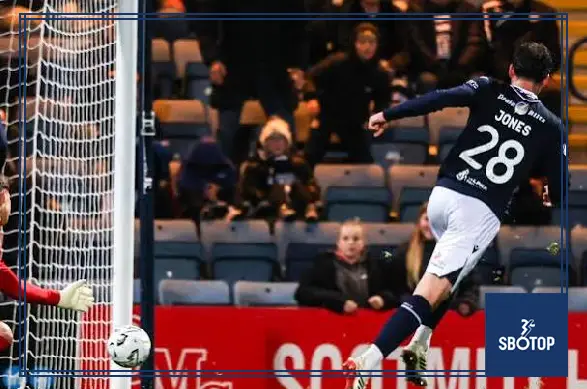
The midfielder won possession from Dan Neil near the Rangers penalty area and finished past Ivor Pandur, restoring Dundee’s belief after a demanding spell.
Neither side could find a winner, leaving Rangers with frustration over an opportunity surrendered and Dundee with a point earned through ambition, goalkeeping and persistence.
The visitors remained second immediately after the match, one point behind Celtic, who still had their fixture against Hearts to play the following day.
Dundee Make Their Early Intentions Clear
Dundee approached the contest with confidence after victories over Motherwell and Falkirk. Rather than retreating immediately, Steven Pressley’s side contested midfield and looked to move forward whenever Rangers left space.
Their early work gradually developed into the more convincing first-half performance.
Alan Forrest helped carry attacks forward, while Joe Bevan offered movement and Ashley Hay provided a physical presence against the visiting defence.
Dundee’s threat also extended to set pieces. Hay met Ethan Hamilton’s corner with a powerful header that struck the crossbar, giving Rangers a warning before the opening goal arrived.
Hamilton later shot narrowly wide after possession changed hands.
These opportunities showed why the hosts were becoming increasingly encouraged. They were not relying exclusively on Rangers making mistakes. Their passing, movement and willingness to compete for second balls were helping create the situations from which danger developed.
Rangers needed greater control, but struggled to establish it.
Fink Rewards the Hosts’ Stronger Start
Dundee took the lead in the 37th minute through Fink.
A long ball brought Hay into a challenge with Dujon Sterling near the edge of the penalty area. The ball broke into Fink’s path, and the forward reacted decisively.
He advanced towards Pandur, rounded the goalkeeper and finished from a narrow angle.
The move required composure after the initial opportunity appeared. Fink avoided rushing the shot and instead created the angle he needed to complete the attack.
For Dundee, it was a reward for their earlier pressure. For Rangers, it exposed a failure to manage a direct ball and the danger that followed.
The concession was particularly frustrating because the visitors had not been overwhelmed by an elaborate passing combination. Dundee contested the first action, reacted to the loose ball and executed the finish.
Rangers now needed an attacking response to prevent a difficult half from ending with a deficit.
Bouanani Changes the Half-Time Picture
That response arrived five minutes later.
Dundee could not fully clear a Rangers attack, and after an initial effort was blocked, Bouanani seized his opportunity. The winger curled a fine finish into the top corner to level the score in the 42nd minute.
It was his first Rangers goal and an important intervention in a match that had been moving Dundee’s way.
The finish demonstrated how individual quality can alter the balance of an evening without necessarily reflecting the preceding performance.
Dundee had created enough danger to justify their advantage, yet Rangers reached the interval level.
That distinction mattered. Bouanani’s goal did not mean the visitors had solved their problems, but it reduced the immediate consequences of those problems.
McInnes could address his team’s shortcomings without also needing to recover a goal. Pressley, meanwhile, had to ensure Dundee retained confidence despite losing their lead so close to half-time.
Rangers Raise the Tempo After the Break
The second half brought a different Rangers performance.
Their attacks became quicker, their movement more threatening and their pressure harder for Dundee to escape. Kim Min-su gained influence, while Bouanani and Djeidi Gassama increasingly tested the home defence.
Owen Goodman became central to Dundee’s resistance.
The goalkeeper denied Bouanani after the winger broke through and also saved from Gassama as Rangers began generating clearer opportunities.
Those interventions preserved the score while the visitors were enjoying their strongest spell.
Dundee were not entirely without a response. Fink met a Jones delivery but headed straight at Pandur, reminding Rangers that their improved attacking work still needed defensive protection.
Nevertheless, the momentum had shifted.
The hosts now had to demonstrate qualities different from those that had defined their first half. Confident attacking play gave way to longer defensive passages, with concentration and recovery becoming increasingly important.
Raskin Delivers a Spectacular Lead
Rangers went ahead on the hour through an exceptional Raskin strike.
The midfielder received the ball outside the penalty area and drove a powerful effort towards goal. It flew past Goodman and went in off the underside of the crossbar.
The finish was the outstanding technical moment of the match.
Goodman had already frustrated Rangers, but Raskin’s combination of power and accuracy left the goalkeeper with little realistic chance.
More importantly, the goal completed the visitors’ turnaround. They had moved from trailing during a difficult opening half to leading 2-1 after a sustained improvement.
It also offered a threat Dundee could not manage simply by restricting service to the forwards. Raskin found a route to goal from deeper territory.
Rangers now had the advantage they wanted. The remaining challenge was to make their stronger spell count for more than a temporary lead.
Goodman Prevents Rangers From Pulling Clear
The period following Raskin’s goal could have taken the contest beyond Dundee.
Rangers continued to threaten, with Goodman making further saves from Bouanani and Gassama. His work kept the difference at one goal.
That contribution became essential to the eventual result.
Jones would supply the equaliser, but Dundee first needed to remain close enough for one successful attack to matter. Goodman ensured that Rangers’ improved attacking output did not become a larger lead.
For the visitors, the missed opportunities left a degree of vulnerability.
A one-goal advantage can disappear through a single mistake, regardless of how convincing the preceding performance has been. Rangers had changed the direction of the game, but had not removed Dundee’s chance of recovering it.
The hosts needed to withstand the pressure and find an opening. Their persistence would soon produce one in an area Rangers could ill afford.
Jones Turns Pressure Into an Equaliser
Dundee levelled in the 69th minute when Jones disrupted Rangers’ attempt to build from the back.
The midfielder pressed Neil, won possession and carried the ball towards goal before finishing calmly past Pandur.
The error was costly, but the goal also reflected purposeful work from Jones.
He was close enough to challenge, alert enough to recognise the opportunity and composed enough to convert once the ball was his.
Rangers’ frustration was understandable. Their strongest period had produced a lead, only for an avoidable loss of possession to erase it.
Dundee’s response was equally significant. They had been forced to defend repeatedly, yet remained willing to apply pressure rather than accepting that the game had moved beyond them.
The equaliser rewarded that approach.
It also changed the final phase. Rangers had to pursue another breakthrough, while Dundee could combine their renewed confidence with the defensive discipline that had kept them within reach.
A Winner Remains Out of Reach
Both teams continued searching for the decisive goal.
Rangers introduced Findlay Curtis and Kevin Kelsy in place of Bouanani and Kim, adding fresh attacking options as the match entered its closing stages.
Dundee, who had brought on Alfie Harrison earlier in the second half, continued to protect their penalty area while looking for opportunities to break.
There were anxious moments, but no final breakthrough.
The overall figures illustrated Rangers’ attacking volume: they finished with 21 attempts and nine shots on target, compared with Dundee’s 10 attempts and six on target.
Those numbers help explain Goodman’s importance. They also reflect the visitors’ substantial improvement after half-time.
They do not, however, establish that Rangers controlled the entire contest. Dundee’s first-half chances and their response after falling behind were integral to the outcome.
The draw emerged from changing periods of influence, with neither side sustaining its strongest football long enough to secure victory.
Different Reactions to a Shared Point
McInnes’ post-match frustration centred on conceding twice and allowing victory to escape. He felt Rangers had missed an opportunity, particularly after establishing their second-half advantage.
Pressley highlighted Dundee’s resilience alongside the quality of their first-half play. His team had been required to absorb pressure, but had continued competing until Jones restored parity.
For Rangers, the immediate consequence was a missed chance to move above Celtic. It was an opportunity lost on the night, rather than evidence that the wider title race had been decided.
Dundee extended their encouraging run to seven points from three matches and could draw confidence from succeeding through different demands.
They had attacked with purpose, survived a difficult spell and capitalised when the opportunity returned.
Rangers produced the evening’s most spectacular finishes. Dundee supplied the persistence that ensured those moments were not enough to separate the teams.
Also Read: