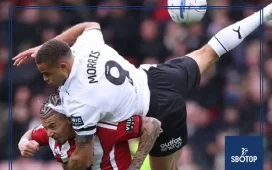


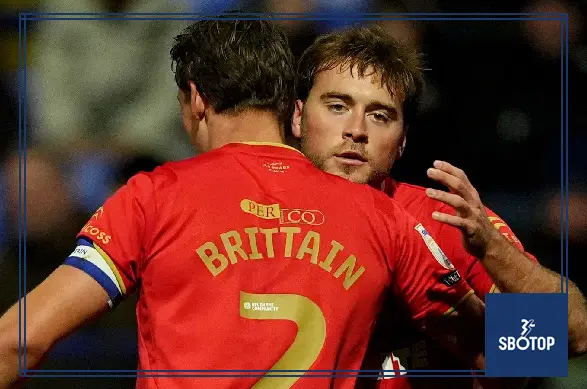
Middlesbrough delivered an emphatic statement of their Championship ambitions with a 5-1 victory over Bolton Wanderers at the Toughsheet Community Stadium on Friday, 23 October 2026. Will Lankshear scored twice as the visitors combined a commanding first half with a decisive late attacking burst.
Aidan Morris opened the scoring before Lankshear doubled the advantage. A deflected Adilson Malanda header produced Middlesbrough’s third, although Theo Bair restored some Bolton hope shortly before the interval. Amario Cozier-Duberry and Lankshear then struck within five minutes of each other during the second half to complete the result.
The victory took Kim Hellberg’s side to the top of the Championship immediately after the match. More importantly, it demonstrated their ability to turn attacking superiority into a convincing away win against opponents who had recently produced encouraging results.
Middlesbrough Establish Their Intent Early
Middlesbrough began with urgency, winning an early corner and threatening before Bolton had found a settled rhythm. Tommy Conway came close inside the opening minutes, setting the tone for a first half in which the visitors repeatedly reached dangerous positions.
An assertive start can change the demands on a home team. Rather than building confidence through possession, Bolton were required to defend and respond to movement around their penalty area.
From a tactical perspective, early pressure is most effective when it connects several actions. The initial attack must be supported by players ready to recover clearances, maintain passing options and protect against a counterattack.
Middlesbrough’s opening approach created the conditions for sustained threat. Their first goal was therefore part of an established attacking pattern rather than an isolated moment in an otherwise quiet beginning.
Morris Provides the Breakthrough
Morris opened the scoring in the 13th minute, finishing after Cozier-Duberry supplied the ball. The goal rewarded Middlesbrough’s positive approach and gave them an advantage to build upon.
Bolton had threatened shortly beforehand through Rúben Rodrigues, whose effort was held. That sequence illustrated how quickly the direction of a match can change when an opportunity at one end is followed by a successful attack at the other.
For the visitors, the opening goal altered the balance without completing the task. They still needed to maintain concentration and prevent Bolton from using the setback as a stimulus.
Analytically, the value of scoring first depends partly on what follows. A team that immediately abandons its attacking strengths may invite pressure. Middlesbrough instead continued looking for opportunities to extend their lead.
Lankshear Finishes a Flowing Move
The second goal arrived in the 31st minute, with Conway supplying Lankshear after a well-constructed attacking sequence. The striker’s finish gave Middlesbrough a stronger hold on the contest.
The move highlighted the relationship between preparation and execution. A final pass creates its greatest value when the receiving player has already recognised where the space will appear.
Lankshear’s role involved more than reacting once the ball arrived. Timing, positioning and readiness to finish were necessary to convert the teamwork into a goal.
For Bolton, the concession increased the pressure on their next decisions. They needed a response, but committing more players forward risked giving Middlesbrough additional space. Managing that tension became increasingly difficult as the visitors continued to threaten.
A Third Goal Deepens Bolton’s Problems
Middlesbrough extended their advantage in the 39th minute when Malanda met a corner and his header deflected off Lewis Brunt before crossing the line.
The incident added a set-piece route to the visitors’ attacking success. Bolton were now three goals behind, with the task of restoring competitiveness becoming more demanding.
Goalkeeper Gavin Bazunu had already made several saves, but those interventions could not prevent Middlesbrough from building a substantial lead. His work helped limit the damage without changing the broader pattern.
From an analytical perspective, repeated pressure places cumulative demands on defenders. They must respond to deliveries, recover positions and track fresh movement. Even when the first action is dealt with, the next phase can produce another problem before the defensive shape has fully recovered.
Bair Gives the Home Side Hope
Bolton found a response in first-half stoppage time through Bair. His finish reduced the deficit to 3-1 and ensured the hosts entered the interval with something more positive to build upon.
The goal did not erase Middlesbrough’s advantage, but it changed the emotional context. A three-goal deficit can feel increasingly remote; cutting it to two preserves a more credible route back.
Bolton subsequently improved their resistance after the restart, preventing Middlesbrough from registering a shot for almost 20 minutes. Their response showed that the contest was not simply an uninterrupted sequence of visiting attacks.
However, improvement needed to produce a further change in the score. Middlesbrough still held a meaningful cushion, allowing them time to manage the home side’s stronger period and search for their next opening.
Middlesbrough Manage the Second-Half Response
The period after half-time tested a different part of Middlesbrough’s performance. Their first-half attacking fluency had created the advantage, but Bolton’s response required patience and sound decisions.
Protecting a lead does not necessarily mean retreating. It can involve retaining possession, keeping useful distances between players and choosing moments to advance without exposing the defence unnecessarily.
A team also needs to recognise that the opposition may improve. Expecting every phase to resemble a dominant first half can encourage frustration when attacking opportunities become less frequent.
Analytically, Middlesbrough’s task was to remain organised until the match offered space again. They did not need to force a fourth goal immediately. Bolton, by contrast, faced increasing pressure to convert their improved spell into something tangible.
Cozier-Duberry Delivers the Decisive Fourth
Cozier-Duberry scored in the 73rd minute after being found by Riley McGree. His finish restored Middlesbrough’s three-goal cushion and significantly reduced the prospect of a Bolton recovery.
The goal mattered because of its timing as much as its quality. Bolton had kept the deficit at two and were still searching for a way to make the closing stages more uncomfortable.
Instead, the visitors converted another attacking opportunity and moved the match firmly back towards their preferred outcome.
From a tactical perspective, the fourth goal demonstrated the importance of remaining threatening while managing a lead. Middlesbrough’s earlier work provided security, but their continued attacking ambition ensured Bolton could not concentrate entirely on pushing forward without considering the consequences behind them.
McGree Supplies Another Opening for Lankshear
Five minutes later, McGree again provided the decisive pass, squaring for Lankshear after a rapid break. The striker finished to make it 5-1 and complete his double.
Middlesbrough’s final two goals turned a controlled advantage into an emphatic scoreline. They also reflected the contribution of players beyond the goalscorers, with McGree supplying the final ball on both occasions.
The club’s assessment highlighted the quality of the first-half display and the significance of Cozier-Duberry’s fourth in securing the points. Lankshear’s second then completed a memorable evening for the travelling support.
Analytically, an unselfish final pass can be as important as an individual finish. Recognising a teammate in a better position increases the value of a breakaway and reduces the dependence on a difficult shot.
Bolton Need a Specific Defensive Review
Conceding five goals demands attention, but a useful review must go beyond describing the defence as poor. The goals came through different situations, including combinations, a corner and a late break.
Those sequences involve related but distinct responsibilities. Defending a delivery requires marking and movement, while protecting against a counterattack depends on positioning before possession is lost.
Bolton also need to examine how often Bazunu was required to intervene. A goalkeeper can help keep a match competitive, but repeated saves are rarely a sustainable basis for control.
At the same time, their goal and improved spell after the interval should remain part of the assessment. The task is to retain the elements that worked while correcting the decisions that repeatedly allowed Middlesbrough to create danger.
A Promotion Statement Rather Than a Guarantee
Moving to the top immediately after the match gave Middlesbrough an obvious reward. The scale of the victory also provided evidence of their attacking potential.
However, one outstanding evening does not establish the eventual outcome of a Championship season. Promotion requires consistency across changing circumstances, including matches where space is limited and chances arrive less frequently.
The most encouraging aspect was the range of contributions. Morris supplied the opener, Conway helped create Lankshear’s first, Cozier-Duberry scored and assisted, and McGree provided the final two goals.
That collective involvement offers a stronger foundation than relying on one exceptional individual. Maintaining those connections will matter when opponents adjust their approach and Middlesbrough encounter more difficult periods.
Five Goals Capture a Complete Attacking Evening
The final score reflected Middlesbrough’s superiority without erasing Bolton’s attempts to respond. The hosts briefly renewed hope before half-time and improved after the break, but could not turn that resistance into a sustained comeback.
Middlesbrough combined an aggressive opening with the patience to withstand a more competitive spell. Their late goals then ensured the match ended with a margin that matched their attacking authority.
For Bolton, the defeat left clear work on defensive organisation and the management of dangerous transitions. For the visitors, it provided points, confidence and a place at the summit that evening.
Lankshear’s double supplied the headline, but the performance belonged to the wider team. Middlesbrough created, combined and finished with conviction, turning a demanding away fixture into a powerful demonstration of their Championship ambitions.
Also Read: